Block chargebacks and payment fraud while increasing conversion rates
Leading payment and crypto teams rely on Verisoul to block location spoofing, stolen credit cards, and repeat abuse without false positives
TRUSTED BY COMPANIES ACROSS EVERY INDUSTRY
Verisoul protects the entire advertising landscape

Social Casino & Gaming
Gains cuts chargebacks to 0.11% and improves margins by 7% with Verisoul
7%
improvement in overall margins
$30k+
Saved across 50k transactions ($0.75 per transaction)
>$100K
Saved in account redemption abuse
Use Cases Solved:
Payment Fraud / Chargebacks
Promotion Abuse (Bonus Farming)
Redemption Abuse
Multi-accounting
Verisoul vs. Competitors

Win rate

Customers that chose Verisoul
Key Differentiators:
Stronger identity intelligence
Verisoul augments real-time detection with email reputation, online history, and social account intelligence.
Modern proxy detection
TruValidate relies on IP blocklists. Verisoul uses active network forensics to detect new residential and mobile proxies before they appear on lists.
Win rate
Customers that chose Verisoul
Why customers choose Verisoul:
Stronger identity intelligence
Verisoul augments real-time detection with email reputation, online history, and social account intelligence.
Modern proxy detection
TruValidate relies on IP blocklists. Verisoul uses active network forensics to detect new residential and mobile proxies before they appear on lists.
Win rate
Customers that chose Verisoul
Key Differentiators:
Stronger identity intelligence
Verisoul augments real-time detection with email reputation, online history, and social account intelligence.
Modern proxy detection
TruValidate relies on IP blocklists. Verisoul uses active network forensics to detect new residential and mobile proxies before they appear on lists.
Win rate
Customers that chose Verisoul
Key Differentiators:
Stronger identity intelligence
Verisoul augments real-time detection with email reputation, online history, and social account intelligence.
Modern proxy detection
TruValidate relies on IP blocklists. Verisoul uses active network forensics to detect new residential and mobile proxies before they appear on lists.
Win rate
Customers that chose Verisoul
Key Differentiators:
Detects advanced location spoofing
Verisoul catches advanced residential and mobile proxies that Sardine misses.
Catch fraud with less work
Verisoul catches fraud out of the box - without needing months of rule-building.
Win rate
Customers that chose Verisoul
Key Differentiators:
Stronger identity intelligence
Verisoul augments real-time detection with email reputation, online history, and social account intelligence.
Modern proxy detection
TruValidate relies on IP blocklists. Verisoul uses active network forensics to detect new residential and mobile proxies before they appear on lists.
Protect your payments, invisibly
Use Verisoul to increase your fraud detection precision, catch sophisticated proxies & location spoofing, and identify repeat abusers.
Reduce false positive declines
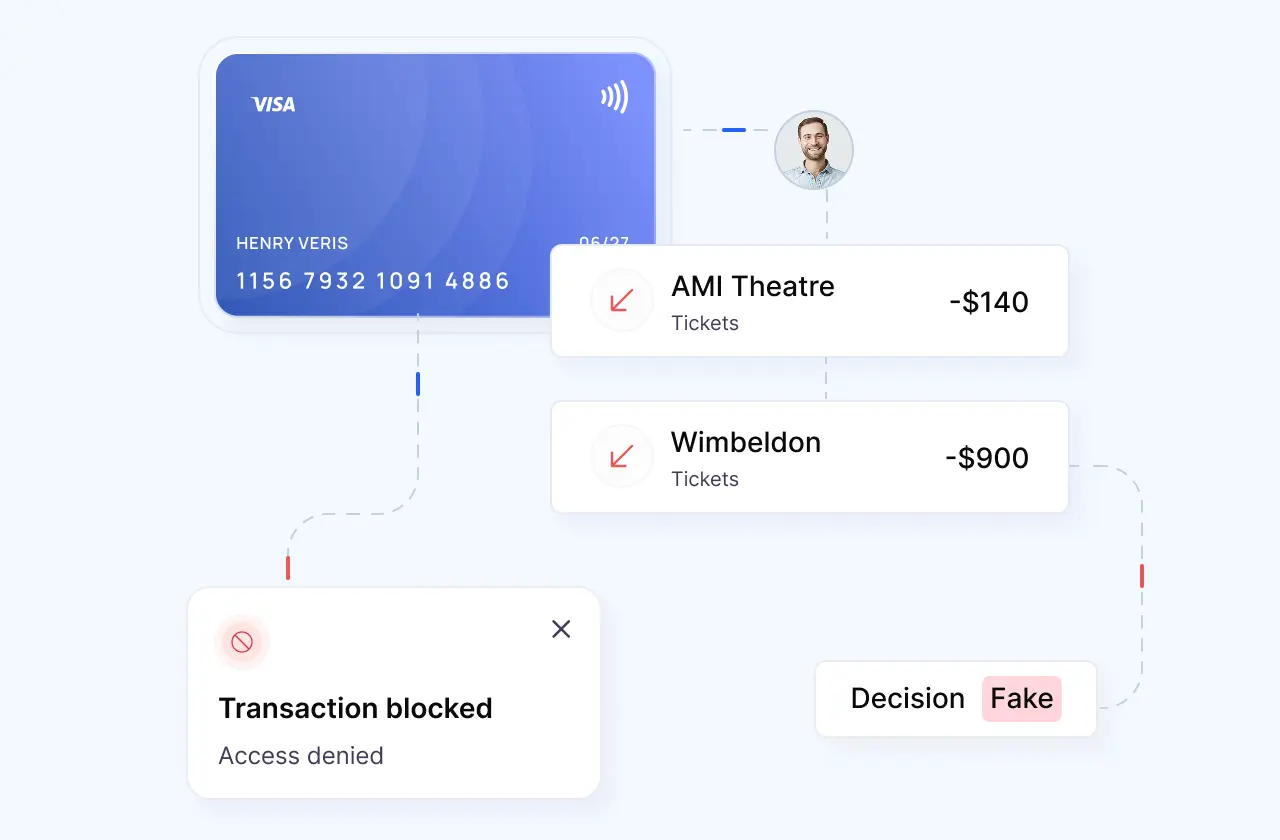
Approve more legitimate customers without increasing fraud. When Verisoul says it’s fraud - it actually is.

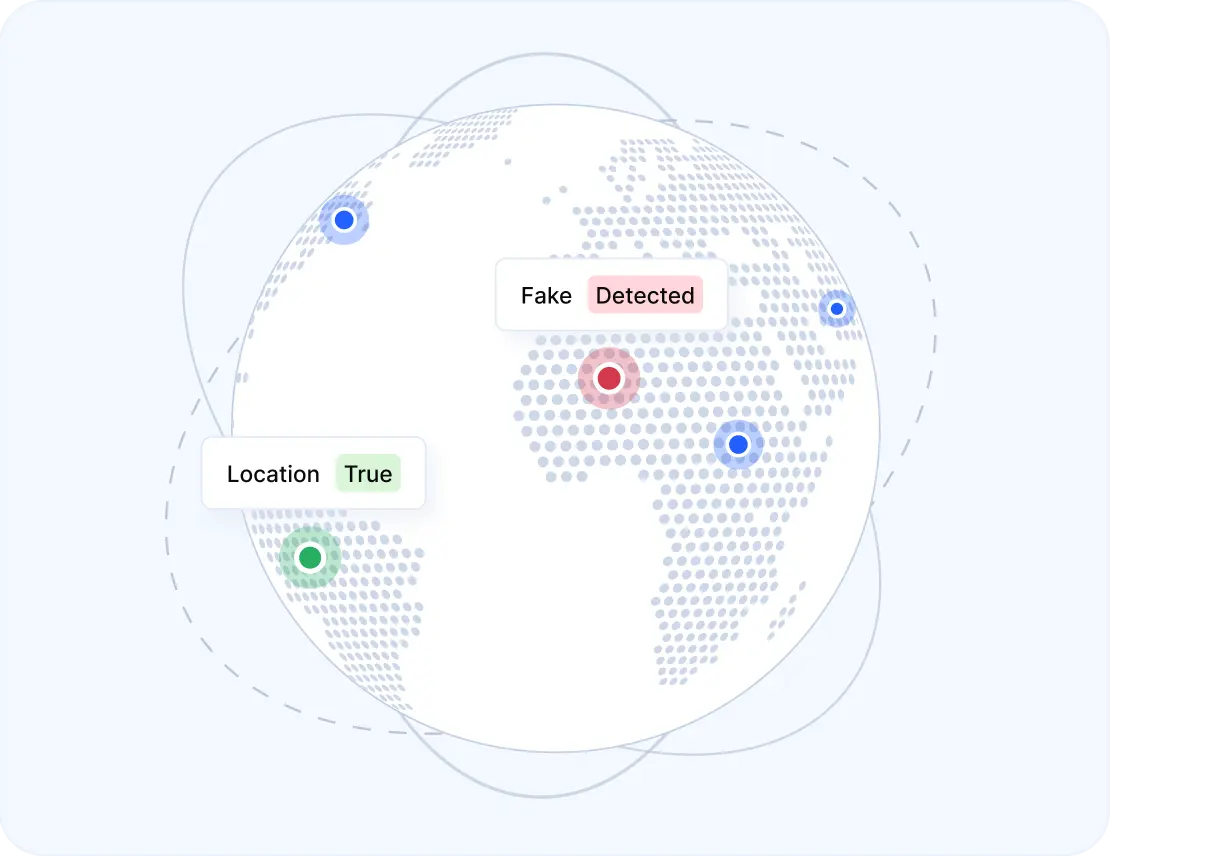
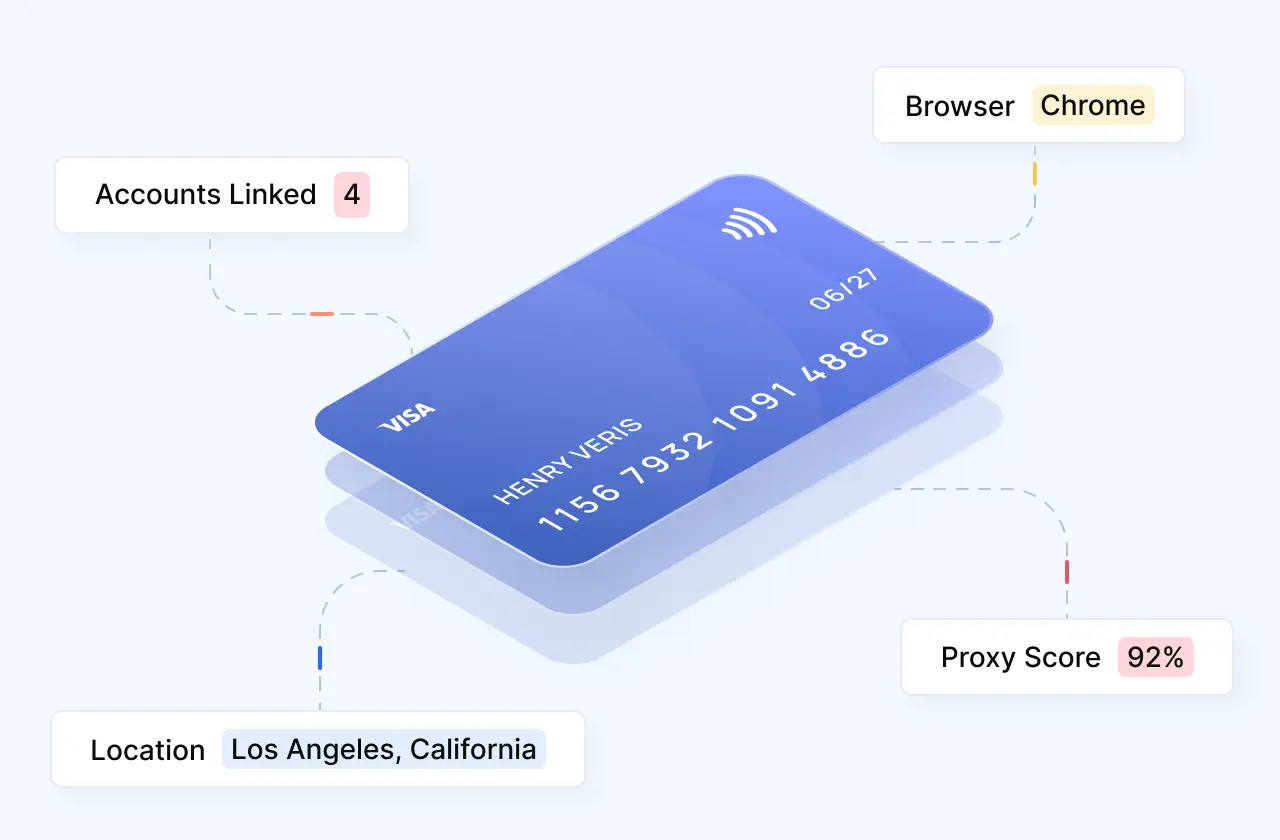
Detect location spoofing and residential proxies
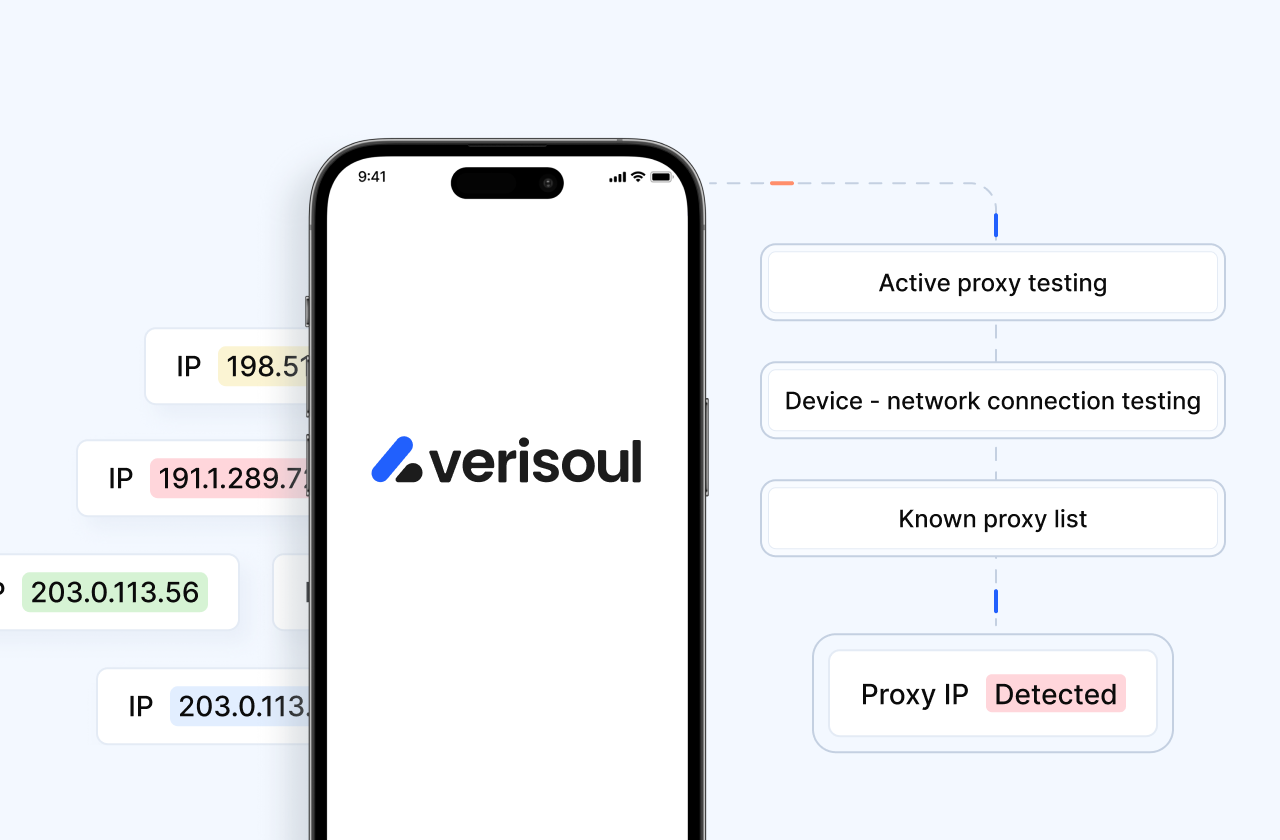
Identify mobile proxies, residential proxies, VPNs, and location spoofing. Verisoul uses active network forensics and device context to validate true location
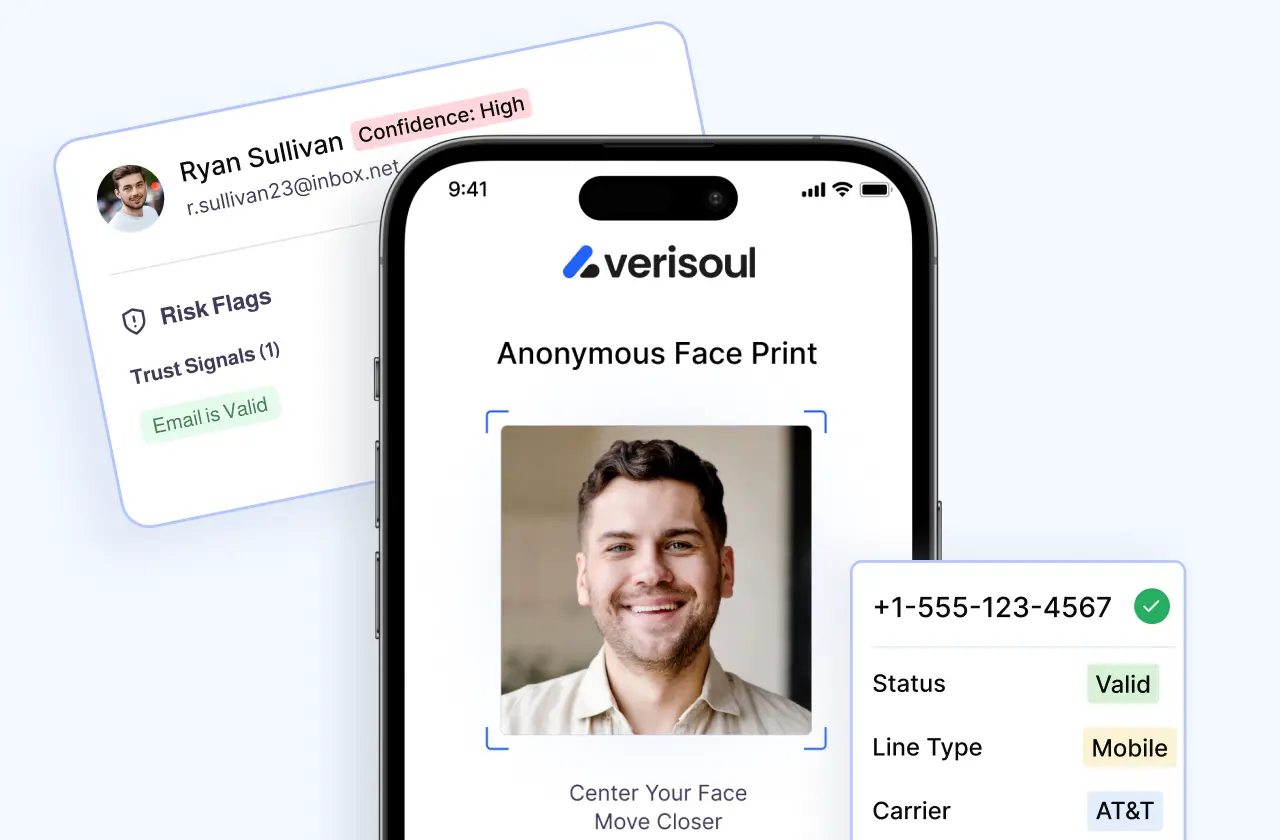
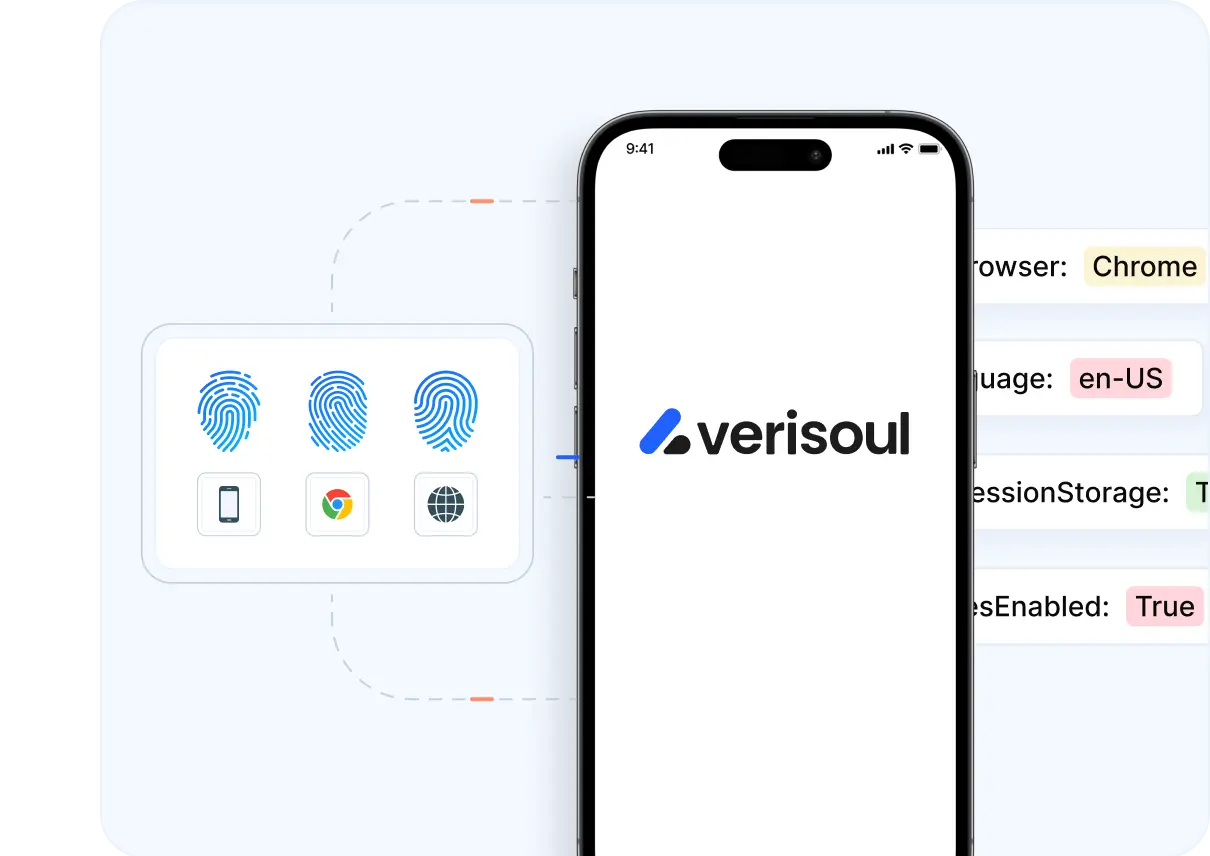
Identify repeat fraudsters with fingerprinting
Detect repeat fraudsters even when they rotate cards, emails, devices, or IP addresses. Verisoul’s fingerprinting and identity resolution link new payment attempts back to known bad actors.
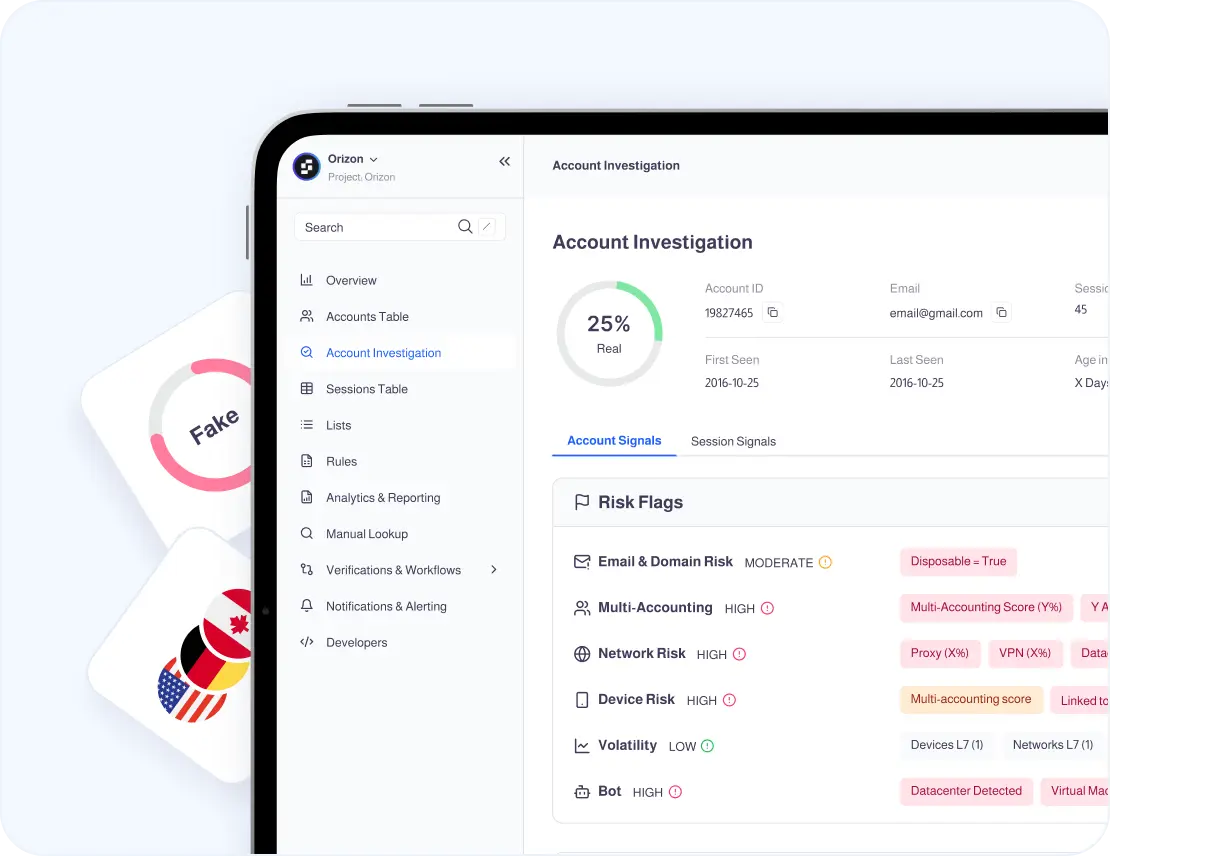
Combine Verisoul signals into your in-house payment models
Use Verisoul as a high-quality signal layer inside your existing fraud and risk models. Incorporate our identity, device, network, and location signals to improve scoring accuracy.
Identify repeat fraudsters with fingerprinting
Detect repeat fraudsters even when they rotate cards, emails, devices, or IP addresses. Verisoul’s fingerprinting and identity resolution link new payment attempts back to known bad actors.
FAQs
What types of fraud does Verisoul prevent for payments and crypto platforms?
What types of fraud does Verisoul prevent for payments and crypto platforms?
Verisoul prevents the most common and costly fraud affecting payments and crypto platforms, including payment fraud, false positive declines, repeat fraudsters, proxy-based abuse, location spoofing, account takeovers, refund abuse, and automated attacks.
Verisoul is designed for high-stakes financial transactions, where incorrect decisions either create fraud losses or block legitimate customers. Detection happens in real time using identity, device, network, behavioral, and location intelligence that improves both fraud prevention and approval rates.
How does Verisoul help reduce false positive payment declines?
Verisoul reduces false positives by providing high-confidence identity and device signals that help distinguish real customers from risky behavior.
Payment teams use Verisoul to:
- Differentiate legitimate users from fraud that looks similar at the transaction level
- Add context beyond card, IP, or velocity rules
- Improve authorization rates without relaxing fraud thresholds
- Reduce customer friction caused by unnecessary step-ups or declines
This is especially valuable for international payments, mobile traffic, and repeat customers, where traditional signals are noisy.
How does Verisoul identify previous fraudsters in payments and crypto?
Verisoul identifies repeat fraudsters by linking new payment attempts back to known abusive identities, even when they attempt to evade detection.
Repeat fraud detection includes:
- Processing-based device fingerprinting that is resilient to resets and spoofing
- Probabilistic identity resolution across devices, emails, cards, and networks
- Longitudinal tracking of users over time
- Cross-customer fraud intelligence, where permitted, to detect repeat abuse patterns
This allows teams to stop fraudsters who rotate cards, emails, wallets, or IP addresses.
Can Verisoul detect mobile and residential proxies and location spoofing in payments and crypto?
Can Verisoul detect mobile and residential proxies and location spoofing in payments and crypto?
Yes. Verisoul is designed to detect mobile proxies, residential proxies, VPNs, and location spoofing commonly used in payment and crypto fraud.
Fraudsters use proxy infrastructure and geo-manipulation to bypass velocity rules, evade country restrictions, and reduce detection. Verisoul detects this using:
- Network inspection techniques that flag encrypted proxy tunnels and abnormal packet routing
- Detection of intermediary or middleman devices intercepting or relaying traffic
- Location piercing and triangulation, correlating routing paths, device behavior, and session context to infer a user’s true location
- Environmental consistency checks, including language, fonts, keyboard layout, time zone, and OS region
These signals are critical for detecting cross-border fraud, mule activity, and high-risk crypto transactions.
How does Verisoul integrate with existing payment fraud models?
How does Verisoul integrate with existing payment fraud models?
Verisoul is designed to augment, not replace, your existing fraud and risk systems.
Payment and crypto teams commonly:
- Ingest Verisoul signals into in-house ML models
- Use Verisoul scores as additional features in decisioning pipelines
- Apply Verisoul signals selectively to high-risk transactions
- Improve model precision without rebuilding existing infrastructure
This allows teams to increase accuracy while maintaining full control over decisions.
Does Verisoul add friction to checkout or transactions?
Does Verisoul add friction to checkout or transactions?
No. Verisoul operates invisibly and does not require CAPTCHAs, SMS verification, or additional checkout steps by default.
All detection runs passively in real time, helping teams reduce fraud without hurting conversion or transaction speed.
Can payment and crypto teams control what actions are taken when fraud is detected?
Can payment and crypto teams control what actions are taken when fraud is detected?
Yes. Verisoul provides fraud intelligence and risk signals, while your team controls enforcement.
Common actions include:
- Approving or declining transactions
- Triggering step-up authentication
- Blocking accounts or wallets
- Restricting withdrawals or refunds
This flexibility allows teams to balance fraud loss, approval rates, and customer experience.
How is Verisoul different from traditional payments fraud tools?
How is Verisoul different from traditional payments fraud tools?
Verisoul goes beyond transaction-level analysis by adding identity, device, network, and location context that traditional tools lack.
Most legacy payments fraud systems rely heavily on rules, velocity checks, or historical transaction data, which struggle with proxy-based abuse, false positives, and repeat fraudsters. Verisoul is built to improve signal quality, not just add more rules.
Try Verisoul free
Simplify identity verification and secure your workflows with Verisoul — try it for free.

Verisoul announces $9M Series A!

{ "@context": "https://schema.org", "@type": "FAQPage", "mainEntity": [ { "@type": "Question", "name": "What types of fraud does Verisoul prevent for payments and crypto platforms?", "acceptedAnswer": { "@type": "Answer", "text": "Verisoul prevents payment fraud, false positive declines, repeat fraudsters, proxy-based abuse, location spoofing, account takeovers, refund abuse, and automated attacks across payments and crypto platforms. It is designed for high-stakes financial transactions where incorrect decisions either create fraud losses or block legitimate customers, using real-time identity, device, network, behavioral, and location intelligence to improve both fraud prevention and approval rates." } }, { "@type": "Question", "name": "How does Verisoul help reduce false positive payment declines?", "acceptedAnswer": { "@type": "Answer", "text": "Verisoul reduces false positives by providing high-confidence identity and device signals that help distinguish real customers from risky behavior. Payment teams use Verisoul to add context beyond card, IP, or velocity rules, differentiate legitimate users from fraud that looks similar at the transaction level, improve authorization rates without relaxing fraud thresholds, and reduce customer friction caused by unnecessary step-ups or declines, especially for international payments and mobile traffic." } }, { "@type": "Question", "name": "How does Verisoul identify previous fraudsters in payments and crypto?", "acceptedAnswer": { "@type": "Answer", "text": "Verisoul identifies repeat fraudsters by linking new payment attempts back to known abusive identities, even when they rotate cards, emails, wallets, devices, or IP addresses. It uses processing-based device fingerprinting, probabilistic identity resolution across devices, emails, cards, and networks, longitudinal tracking over time, and cross-customer fraud intelligence where permitted to detect repeat abuse patterns." } }, { "@type": "Question", "name": "Can Verisoul detect mobile and residential proxies and location spoofing in payments and crypto?", "acceptedAnswer": { "@type": "Answer", "text": "Yes. Verisoul detects mobile proxies, residential proxies, VPNs, and location spoofing commonly used in payment and crypto fraud. It uses network inspection techniques to flag encrypted proxy tunnels and abnormal packet routing, detects intermediary or middleman devices relaying traffic, performs location piercing and triangulation by correlating routing paths, device behavior, and session context, and analyzes environmental consistency signals such as language, fonts, keyboard layout, time zone, and OS region to validate where transactions are truly originating from." } }, { "@type": "Question", "name": "How does Verisoul integrate with existing payment fraud models?", "acceptedAnswer": { "@type": "Answer", "text": "Verisoul augments existing fraud and risk systems by providing high-quality identity, device, network, and location signals that can be ingested into in-house decisioning and machine learning models. Teams commonly use Verisoul scores and signals as features in risk pipelines, apply them selectively to high-risk transactions, and improve model precision without replacing their current payments stack." } }, { "@type": "Question", "name": "Does Verisoul add friction to checkout or transactions?", "acceptedAnswer": { "@type": "Answer", "text": "No. Verisoul operates invisibly and does not require CAPTCHAs, SMS verification, or additional checkout steps by default. Detection runs passively in real time, helping teams reduce fraud without hurting conversion, transaction speed, or customer experience." } }, { "@type": "Question", "name": "Can payment and crypto teams control what actions are taken when fraud is detected?", "acceptedAnswer": { "@type": "Answer", "text": "Yes. Verisoul provides fraud intelligence and risk signals while payment and crypto teams control enforcement. Common actions include approving or declining transactions, triggering step-up authentication, blocking accounts or wallets, and restricting withdrawals or refunds based on internal policies." } }, { "@type": "Question", "name": "How is Verisoul different from traditional payments fraud tools?", "acceptedAnswer": { "@type": "Answer", "text": "Verisoul goes beyond transaction-level analysis by adding identity, device, network, and location context that traditional tools often lack. Legacy systems rely heavily on rules, velocity checks, or historical transaction data and struggle with proxy-based abuse, false positives, and repeat fraudsters, while Verisoul is built to improve signal quality and decision accuracy with low false positives." } } ]
}







.svg)