Prevent Fake Accounts Without Blocking Real Sign-Ups
Leading AI and PLG SaaS companies use Verisoul to prevent free account abuse, improve margins, and reduce false positive blocks
TRUSTED BY COMPANIES ACROSS EVERY INDUSTRY



PlanHub

“We’re more confident than ever in the quality of our community as we continue to build a marketplace that our users can trust”
Read full story


B2B Sales Automation & PLG (Product-Led Growth)
Clay generates >$150k in new ARR and saves $175k in costs in one month with Verisoul
$150k ARR
from converting duplicate users to paid plans
$175k/month saved
by stopping credit abuse & bots
Use Cases Solved:
Free Trial Abuse
Multi-accounting (Revenue Recovery)
Data Scraping
Infrastructure Protection
B2B Sales Intelligence & Prospecting
Wiza replaces IPQS with Verisoul - saving $324k/year and cutting false positives by 90%
$324K
saved annually from fraudulent free plans
90%
reduction in false positives and tickets
Use Cases Solved:
Free Plan Abuse
Data Scraping
Multi-accounting
B2B Sales Engagement & Automation
Lemlist blocks 38k fake accounts and saves ~$30k/month with Verisoul
38K
fake accounts blocked in 6 months
$190K
saved by blocking fake accounts in 6 months
Use Cases Solved:
Free Trial Abuse
Multi-accounting
Marketing Attribution / Data Integrity
Construction Marketplace (Two-sided)
PlanHub blocks 11.3% more spam and fraud while keeping false positives at 0.5%
11.3%
more fraud blocked using Verisoul
Use Cases Solved:
Marketplace Trust & Safety
Spam & Scams
Disposable Domains
Multi-accounting
Verisoul vs. Competitors

Win rate

Customers that chose Verisoul
Key Differentiators:
Fewer false positives (30–50%+)
IPQS relies on static IP blocklists, which frequently misclassify legitimate users. Verisoul analyzes live network traffic, catching only true proxy and VPN activity.
Result: Wiza reduced false positives by 90%; Adscend Media reported a drastic reduction.
Holistic fraud decisions
Verisoul combines network, device, behavioral, email, and cluster-level intelligence into a single risk score, while IPQS surfaces fragmented signals.
Transparent scoring and rules
Customers describe IPQS as a “black box.” Verisoul provides clear, configurable fraud scores and rules teams can trust and tune.
Win rate

Customers that chose Verisoul
Key Differentiators:
Fewer false positives (30–50%+)
IPQS relies on static IP blocklists, which frequently misclassify legitimate users. Verisoul analyzes live network traffic, catching only true proxy and VPN activity.
Result: Wiza reduced false positives by 90%; Adscend Media reported a drastic reduction.
Holistic fraud decisions
Verisoul combines network, device, behavioral, email, and cluster-level intelligence into a single risk score, while IPQS surfaces fragmented signals.
Transparent scoring and rules
Customers describe IPQS as a “black box.” Verisoul provides clear, configurable fraud scores and rules teams can trust and tune.
Win rate

Customers that chose Verisoul
Key Differentiators:
Detects advanced location spoofing
Verisoul uniquely identifies cross-continental device farms and large-scale location fraud that Sift misses.
Accuracy & Precision
Customers trust Verisoul results, whereas often find Sift has too many false positives to trust.
Intelligence Signals
Verisoul builds in-house signals that encompass the entire user journey, whereas Sift is primarily focused on payment fraud and orchestration.
Win rate
Customers that chose Verisoul
Key Differentiators:
Detects advanced location spoofing
Verisoul uniquely identifies cross-continental device farms and large-scale location fraud that Sift misses.
Accuracy & Precision
Customers trust Verisoul results, whereas often find Sift has too many false positives to trust.
Intelligence Signals
Verisoul builds in-house signals that encompass the entire user journey, whereas Sift is primarily focused on payment fraud and orchestration.
Win rate
Customers that chose Verisoul
Key Differentiators:
Detects advanced location spoofing
Verisoul uniquely identifies cross-continental device farms and large-scale location fraud that Seon misses.
Fraud signals vs. KYC signals
Verisoul is primarily focused on real-time signals for semi-anonymous users to detect risk & trust levels, whereas Seon is primarily focused on historical user data fit for KYC.
One platform for SaaS & AI Fraud Prevention
Detect fake emails, repeat signups, and takeovers. Use our ML models out of the box or write custom logic with our rules engine.
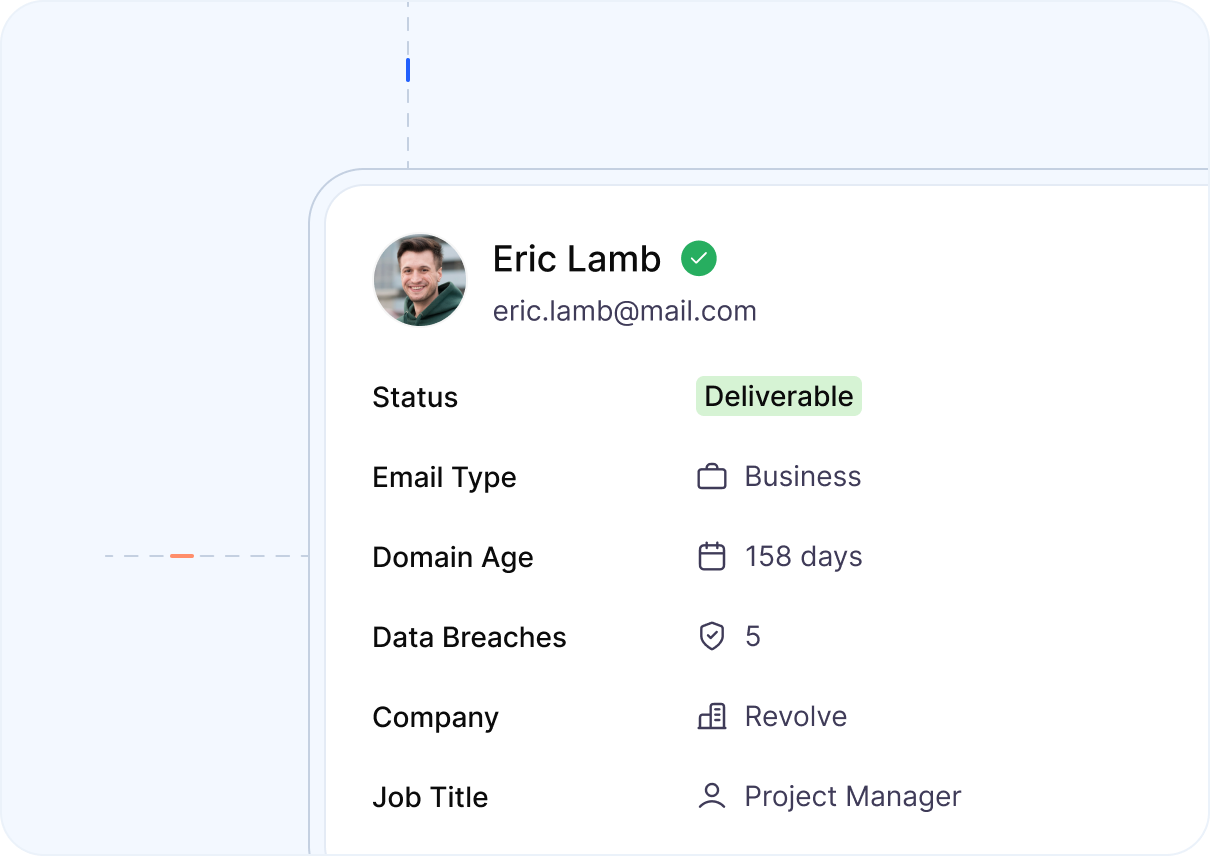
Detect Fake Emails & Domains
Stop disposable emails, fake domains, and fresh emails before they create accounts. Verisoul evaluates email age, domain behavior, and deliverability.
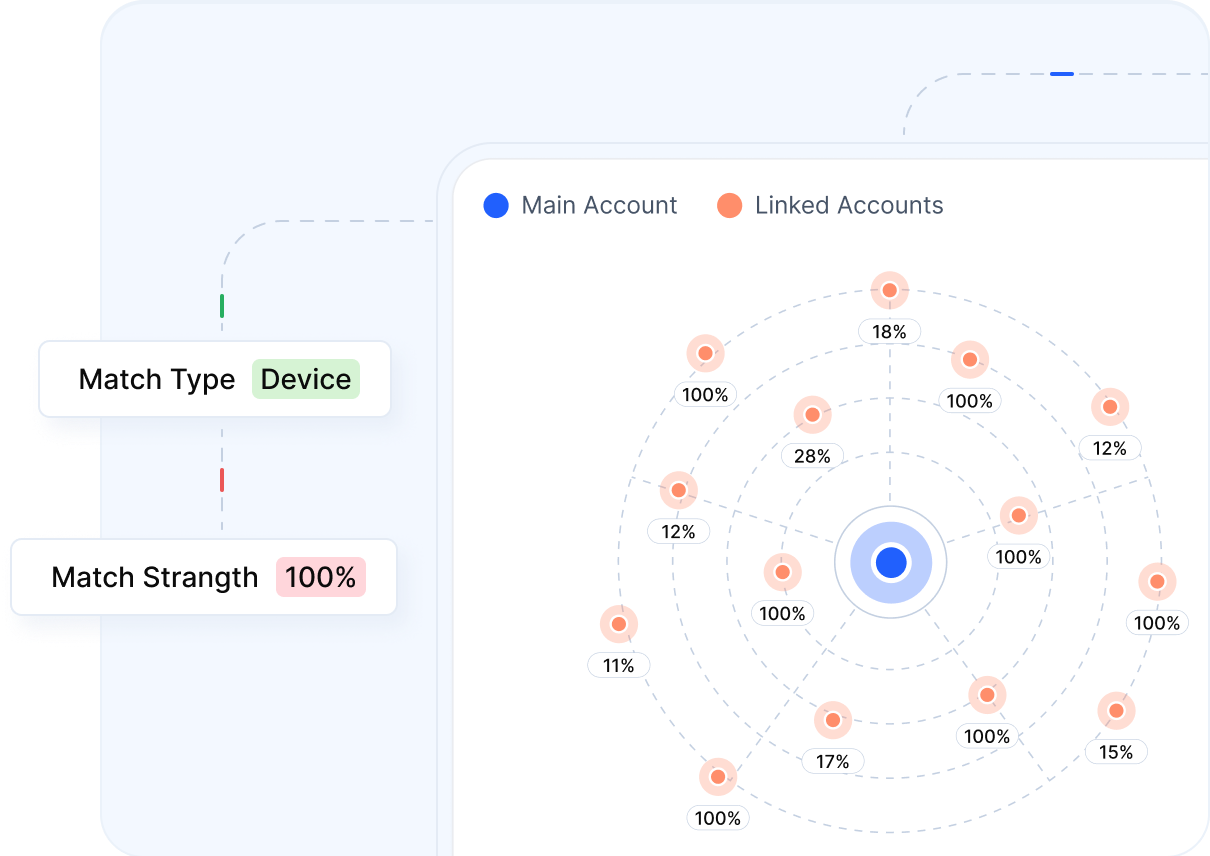
Spot Duplicate and Clustered Signups
Identify duplicates and coordinated signup attacks with device, network, and email fingerprinting. Verisoul links related identities with high precision to stop abuse without blocking real users.
Detect Account Sharing & Takeover
Identify shared credentials and account takeovers using behavioral, device, and network signals without brittle IP or cookie-based rules.

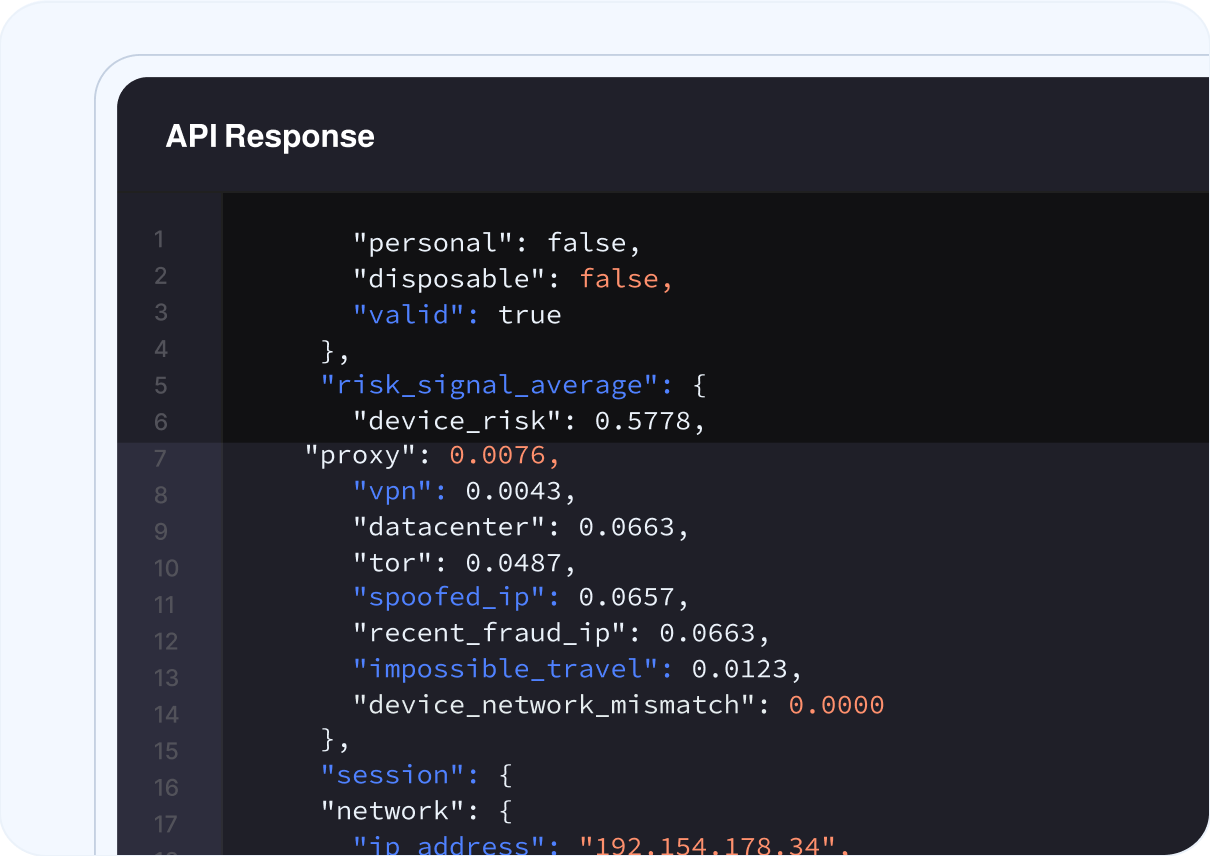
Write Custom Rules & Logic Without Engineering
Launch no-code rules tailored to your product and risk tolerance. Combine Verisoul signals with your own logic and deploy instantly.
Detect Account Sharing & Takeover
Identify shared credentials and account takeovers using behavioral, device, and network signals without brittle IP or cookie-based rules.
FAQs
What types of fraud does Verisoul prevent for AI and PLG SaaS products?
What types of fraud does Verisoul prevent for AI and PLG SaaS products?
Verisoul prevents signup abuse, fake accounts, automated account creation, account sharing, and product abuse in AI and PLG SaaS products.
This includes fake and disposable emails, repeat and clustered signups, bought or scripted signup activity, geolocation fraud, AI token abuse, data scraping, free trial and free plan abuse, and credit or usage abuse. Verisoul stops abuse at signup, login, and usage time to protect revenue, infrastructure, and model access.
How does Verisoul detect fake or disposable emails in SaaS signups?
Verisoul detects fake, disposable, and abusive emails by analyzing email legitimacy, domain behavior, and historical usage patterns in real time.
Verisoul evaluates email age, online history, breach exposure, domain forensics, email similarity, and business legitimacy. For business emails, Verisoul analyzes how legitimate the organization is, where it is registered, and how its domain behaves across signups.
How can Verisoul stop duplicate accounts and coordinated signup attacks?
Verisoul stops duplicate accounts and coordinated signup attacks by linking related identities across devices, networks, and sessions.
It uses device forensics to generate durable fingerprints, combines device- and network-level signals, applies probabilistic identity resolution, and analyzes email and name similarity. Verisoul also tracks users longitudinally and leverages a cross-customer identity graph to detect abuse patterns that single-product tools cannot see.
How does Verisoul detect account sharing in PLG SaaS products?
How does Verisoul detect account sharing in PLG SaaS products?
Verisoul detects account sharing by identifying abnormal device, network, and login volatility across user sessions.
It analyzes device behavior and forensics, impossible travel between logins, and inconsistent device profiles, such as frequent switching between iOS and Android, Windows and macOS, or multiple mobile carriers. High volatility signals shared credentials or abuse without relying on brittle IP rules.
Does Verisoul add friction like CAPTCHAs or extra verification steps?
Does Verisoul add friction like CAPTCHAs or extra verification steps?
No. Verisoul operates invisibly and does not require CAPTCHAs, additional questions, or user-facing challenges.
Fraud detection runs passively using behavioral, device, and network signals. When needed, Verisoul can optionally apply invisible friction such as deeper email research or phone intelligence without harming conversion or onboarding.
Does Verisoul automatically block users?
Does Verisoul automatically block users?
No. Verisoul provides intelligent fraud decisions that your team controls using machine learning signals and custom business logic.
Many teams use Verisoul to block bad actors, but others route detected duplicates to a paywall, limit usage, require upgrades, or surface messaging that drives revenue. This flexibility is especially valuable in PLG and AI SaaS, where abuse prevention and monetization are tightly linked.
Can teams customize fraud rules without engineering work?
Can teams customize fraud rules without engineering work?
Yes. Verisoul includes a no-code rules engine that lets teams define fraud logic based on their business needs.
Teams can allowlist trusted domains, block specific domains or countries, set thresholds for duplicate behavior, and tune responses for free plans, trials, or paid tiers - using Verisoul’s signals without writing code or deploying engineering changes.
How does Verisoul integrate into AI and PLG SaaS products?
How does Verisoul integrate into AI and PLG SaaS products?
Verisoul integrates through flexible APIs that can be embedded anywhere in the user lifecycle.
Teams commonly integrate Verisoul at signup, login, free-tier usage, API access, and checkout to stop abuse where it impacts revenue, infrastructure costs, or AI model access without rewriting product flows.
Is Verisoul only for SaaS, or does it use cross-industry fraud intelligence?
Is Verisoul only for SaaS, or does it use cross-industry fraud intelligence?
Verisoul protects AI and PLG SaaS by leveraging fraud intelligence from over 12 industries.
By observing abuse patterns across payments, gaming, FinTech, marketplaces, and social platforms, Verisoul identifies emerging fraud techniques, like automated abuse and account farming, before they scale inside SaaS and AI products.
Try Verisoul free
Simplify identity verification and secure your workflows with Verisoul — try it for free.

Verisoul announces $9M Series A!

{ "@context": "https://schema.org", "@type": "FAQPage", "mainEntity": [ { "@type": "Question", "name": "What types of fraud does Verisoul prevent for AI and PLG SaaS products?", "acceptedAnswer": { "@type": "Answer", "text": "Verisoul prevents signup abuse, fake accounts, automated account creation, account sharing, and product abuse in AI and PLG SaaS products. This includes fake and disposable emails, repeat and clustered signups, bought or scripted signup activity, geolocation fraud, AI token abuse, data scraping, free trial and free plan abuse, and credit or usage abuse. Verisoul stops abuse at signup, login, and usage time to protect revenue, infrastructure, and model access." } }, { "@type": "Question", "name": "How does Verisoul detect fake or disposable emails in SaaS signups?", "acceptedAnswer": { "@type": "Answer", "text": "Verisoul detects fake, disposable, and abusive emails by analyzing email legitimacy, domain behavior, and historical usage patterns in real time. Verisoul evaluates email age, online history, breach exposure, domain forensics, email similarity, and business legitimacy. For business emails, Verisoul analyzes how legitimate the organization is, where it is registered, and how its domain behaves across signups to stop disposable and impersonated emails without blocking real users." } }, { "@type": "Question", "name": "How can Verisoul stop duplicate accounts and coordinated signup attacks?", "acceptedAnswer": { "@type": "Answer", "text": "Verisoul stops duplicate accounts and coordinated signup attacks by linking related identities across devices, networks, and sessions. It uses device forensics to generate durable fingerprints, combines device- and network-level signals, applies probabilistic identity resolution, and analyzes email and name similarity. Verisoul also tracks users longitudinally and leverages a cross-customer identity graph to detect abuse patterns that single-product tools cannot see." } }, { "@type": "Question", "name": "How does Verisoul detect account sharing in PLG SaaS products?", "acceptedAnswer": { "@type": "Answer", "text": "Verisoul detects account sharing by identifying abnormal device, network, and login volatility across user sessions. It analyzes device behavior and forensics, impossible travel between logins, and inconsistent device profiles such as frequent switching between iOS and Android, Windows and macOS, or multiple mobile carriers. High volatility signals shared credentials or abuse without relying on brittle IP rules." } }, { "@type": "Question", "name": "Does Verisoul add friction like CAPTCHAs or extra verification steps?", "acceptedAnswer": { "@type": "Answer", "text": "No. Verisoul operates invisibly and does not require CAPTCHAs, additional questions, or user-facing challenges. Fraud detection runs passively using behavioral, device, and network signals. When needed, Verisoul can optionally apply invisible friction such as deeper email research or phone intelligence without harming conversion or onboarding." } }, { "@type": "Question", "name": "Does Verisoul automatically block users?", "acceptedAnswer": { "@type": "Answer", "text": "No. Verisoul provides intelligent fraud decisions that your team controls using machine learning signals and custom business logic. Many teams use Verisoul to block bad actors, but others route detected duplicates to a paywall, limit usage, require upgrades, or surface messaging that drives revenue. This flexibility is especially valuable in PLG and AI SaaS, where abuse prevention and monetization are tightly linked." } }, { "@type": "Question", "name": "Can teams customize fraud rules without engineering work?", "acceptedAnswer": { "@type": "Answer", "text": "Yes. Verisoul includes a no-code rules engine that lets teams define fraud logic based on their business needs. Teams can allowlist trusted domains, block specific domains or countries, set thresholds for duplicate behavior, and tune responses for free plans, trials, or paid tiers using Verisoul signals without writing code or deploying engineering changes." } }, { "@type": "Question", "name": "How does Verisoul integrate into AI and PLG SaaS products?", "acceptedAnswer": { "@type": "Answer", "text": "Verisoul integrates through flexible APIs that can be embedded anywhere in the user lifecycle. Teams commonly integrate Verisoul at signup, login, free-tier usage, API access, and checkout to stop abuse where it impacts revenue, infrastructure costs, or AI model access without rewriting product flows." } }, { "@type": "Question", "name": "Is Verisoul only for SaaS, or does it use cross-industry fraud intelligence?", "acceptedAnswer": { "@type": "Answer", "text": "Verisoul protects AI and PLG SaaS by leveraging fraud intelligence from over 12 industries. By observing abuse patterns across payments, gaming, FinTech, marketplaces, and social platforms, Verisoul identifies emerging fraud techniques like automated abuse and account farming before they scale inside SaaS and AI products." } } ]
}