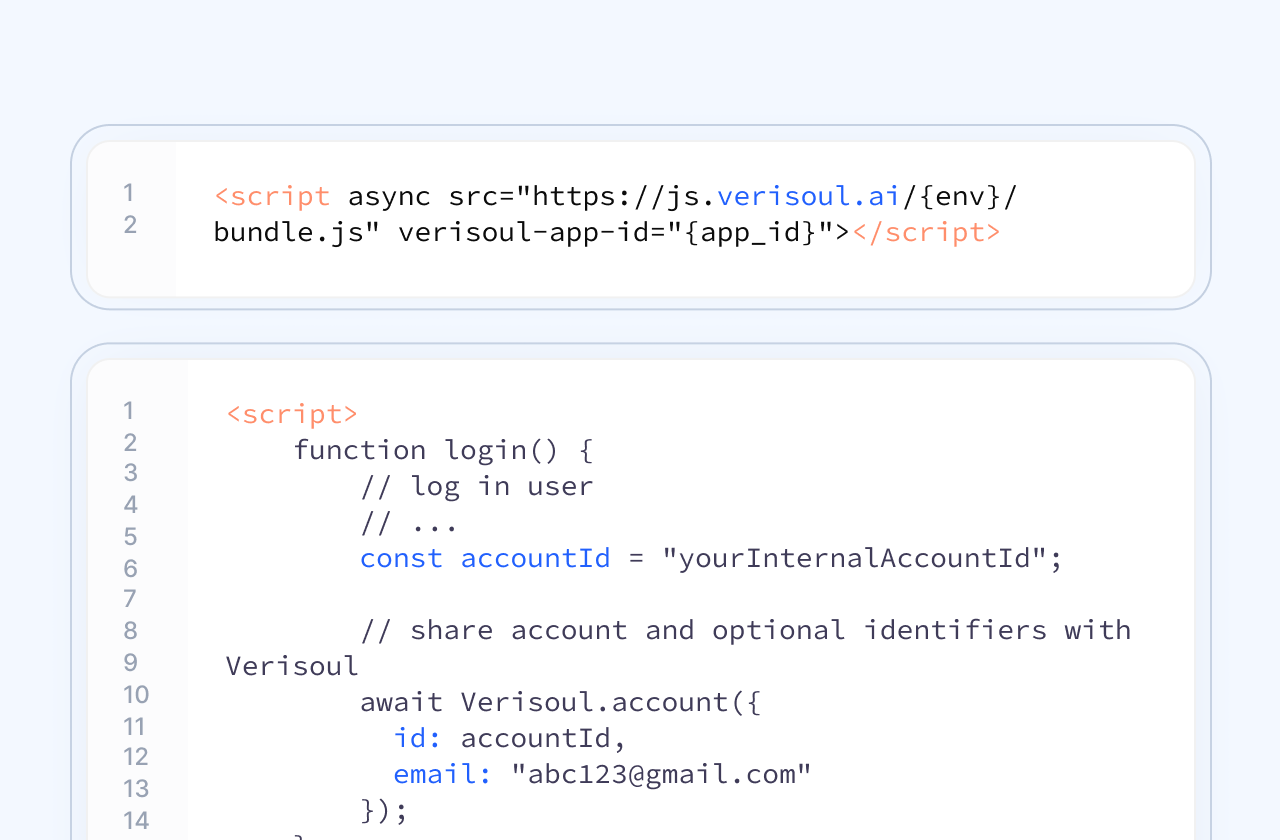
Screen out fraud before KYC and account funding
Leading financial services firms rely on Verisoul to screen out high risk users early - reducing onboarding costs without adding friction.
TRUSTED BY COMPANIES ACROSS EVERY INDUSTRY
Verisoul protects the entire advertising landscape
Verisoul vs. Competitors

Win rate

Customers that chose Verisoul
Key Differentiators:
Stronger identity intelligence
Verisoul augments real-time detection with email reputation, online history, and social account intelligence.
Modern proxy detection
TruValidate relies on IP blocklists. Verisoul uses active network forensics to detect new residential and mobile proxies before they appear on lists.
Win rate

Customers that chose Verisoul
Why customers choose Verisoul:
Detects advanced location spoofing
Verisoul uniquely identifies cross-continental device farms and large-scale location fraud that Fingerprint misses.
Broader identity intelligence
Verisoul incorporates email and phone signals alongside device data for stronger identity resolution.
Higher incremental accuracy
Copper selected Verisoul after finding Fingerprint delivered no incremental fraud detection beyond what Verisoul already caught.
Win rate
Customers that chose Verisoul
Key Differentiators:
Detects advanced location spoofing
Verisoul uniquely identifies cross-continental device farms and large-scale location fraud that Seon misses.
Fraud signals vs. KYC signals
Verisoul is primarily focused on real-time signals for semi-anonymous users to detect risk & trust levels, whereas Seon is primarily focused on historical user data fit for KYC.
Win rate
Customers that chose Verisoul
Key Differentiators:
Detects advanced location spoofing
Verisoul catches advanced residential and mobile proxies that Sardine misses.
Catch fraud with less work
Verisoul catches fraud out of the box - without needing months of rule-building.
Win rate
Customers that chose Verisoul
Key Differentiators:
Detects advanced location spoofing
Verisoul catches advanced residential and mobile proxies that Sardine misses.
Catch fraud with less work
Verisoul catches fraud out of the box - without needing months of rule-building.
Win rate
Customers that chose Verisoul
Key Differentiators:
Detects advanced location spoofing
Verisoul uniquely identifies cross-continental device farms and large-scale location fraud that Seon misses.
Fraud signals vs. KYC signals
Verisoul is primarily focused on real-time signals for semi-anonymous users to detect risk & trust levels, whereas Seon is primarily focused on historical user data fit for KYC.
Modern fraud platform for stopping sophisticated attacks
Save money on KYC and data costs, prevent cross-continental mules and account takeovers, and win with better device and network intelligence
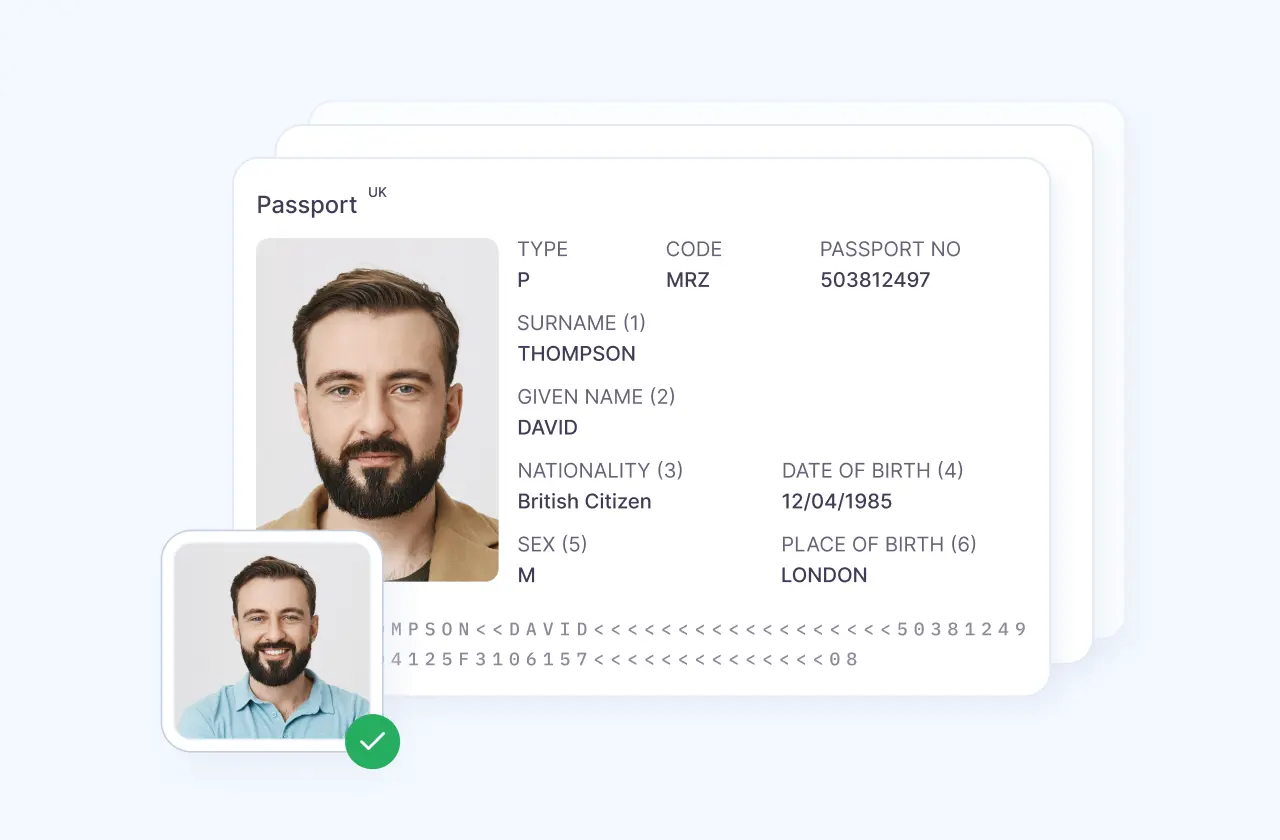
Detect fraud before paying for IDV & KYC
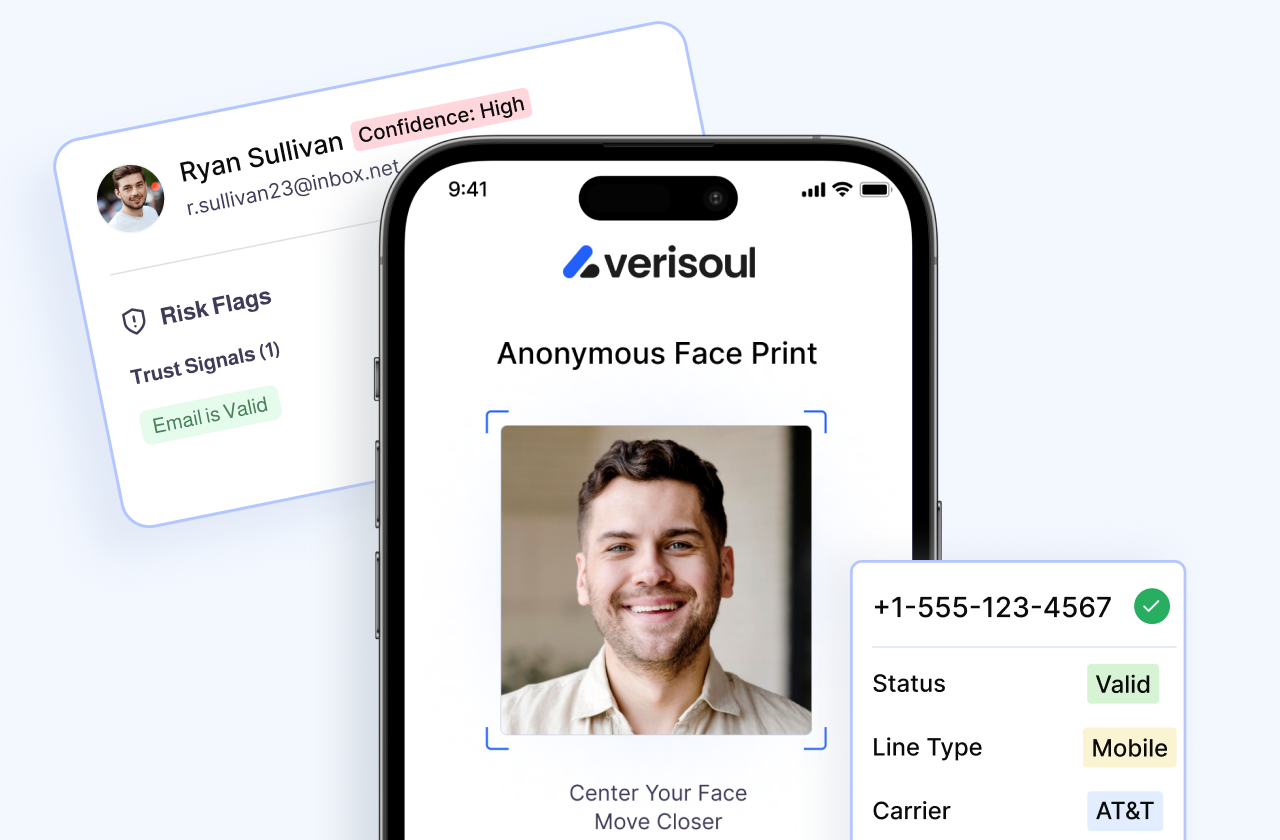
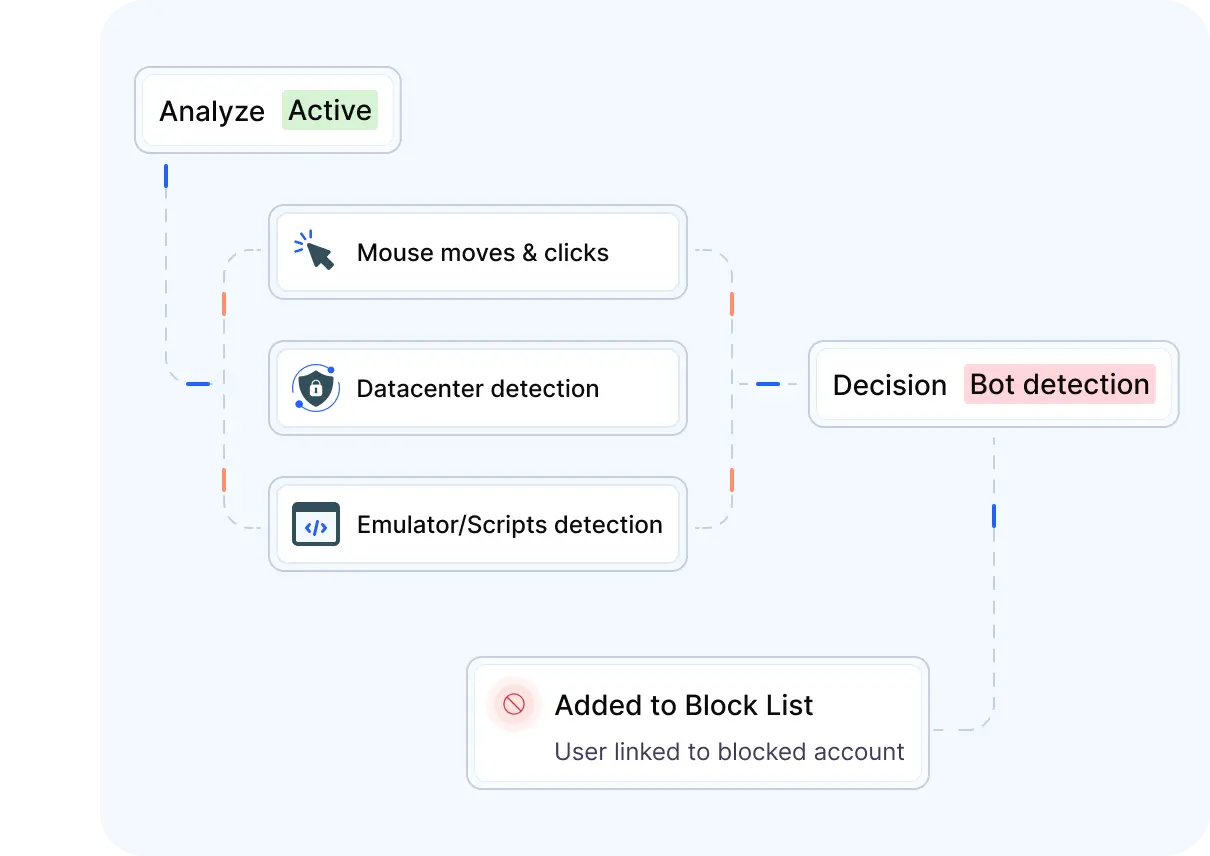
Identify bots, synthetic identities, and incentive abusers early. Verisoul evaluates identity, device, network, and behavioral signals during onboarding so only legitimate users progress to costly KYC and document verification.
Stop account takeover attempts
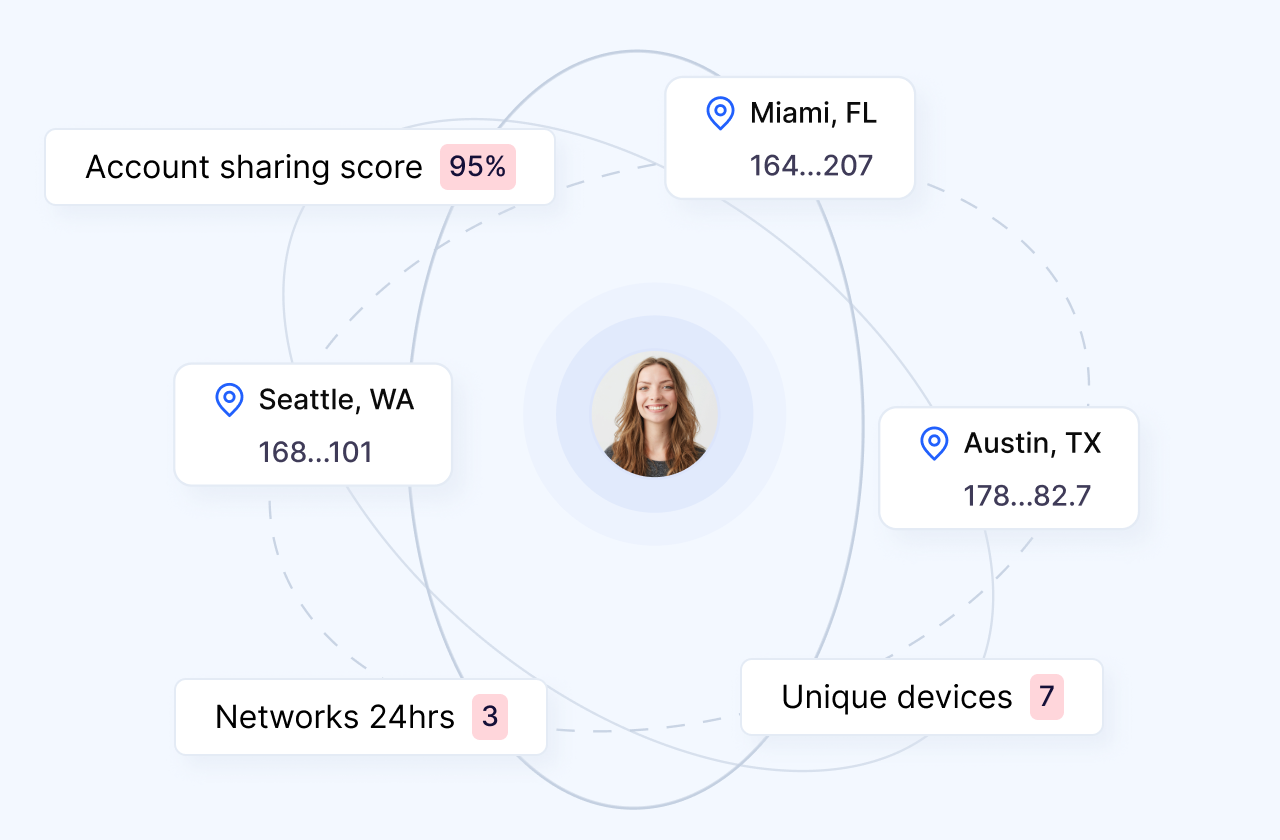
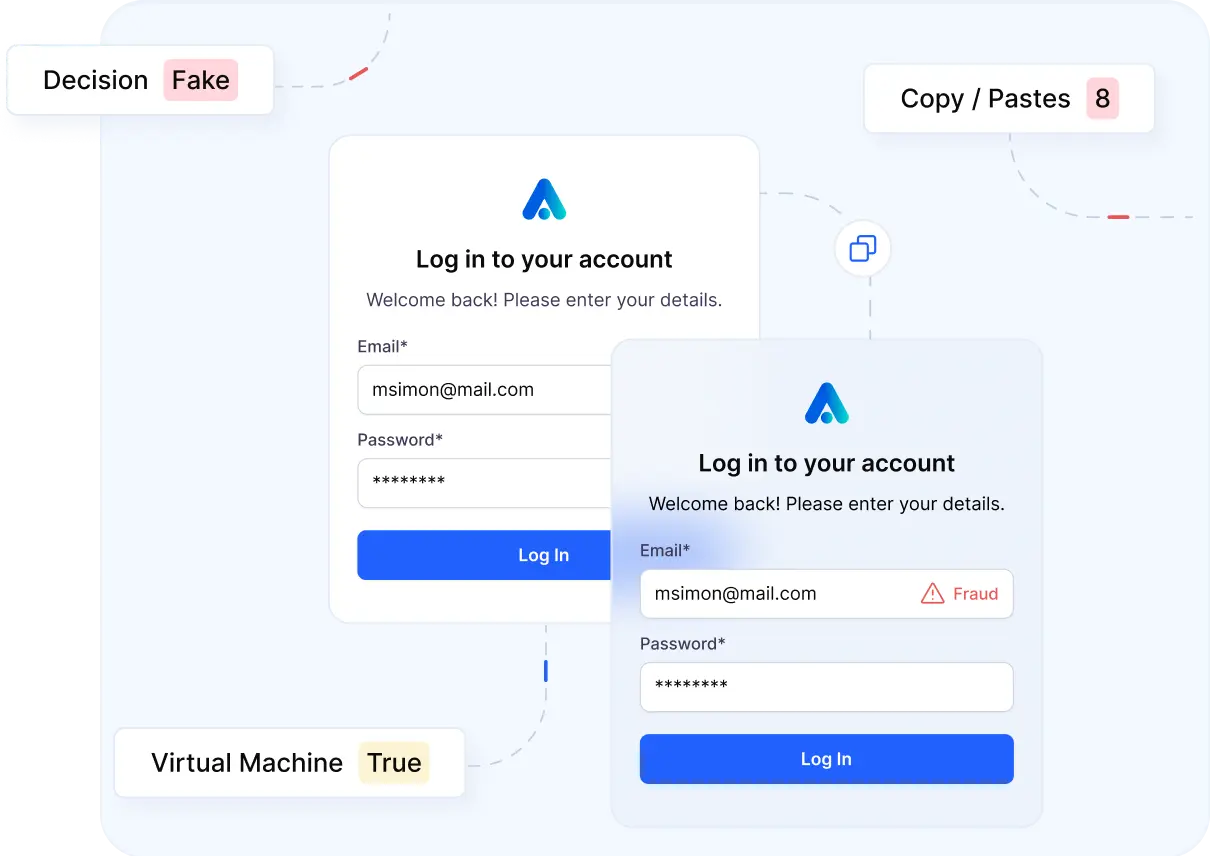
Detect suspicious logins and account access attempts before fraud escalates. Verisoul identifies abnormal device changes, impossible travel, and risky behavior associated with account takeovers without locking out legitimate users.
Detect sophisticated proxy and VPN logins
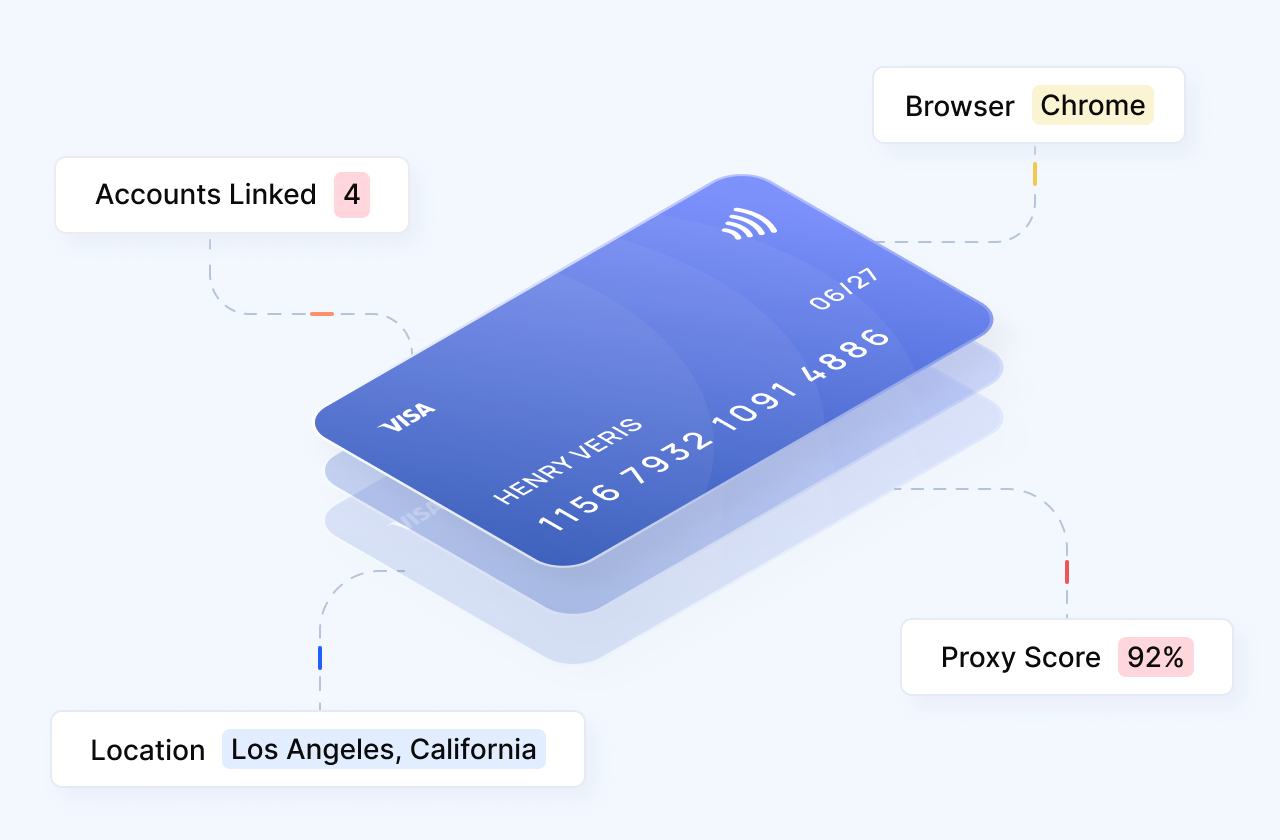
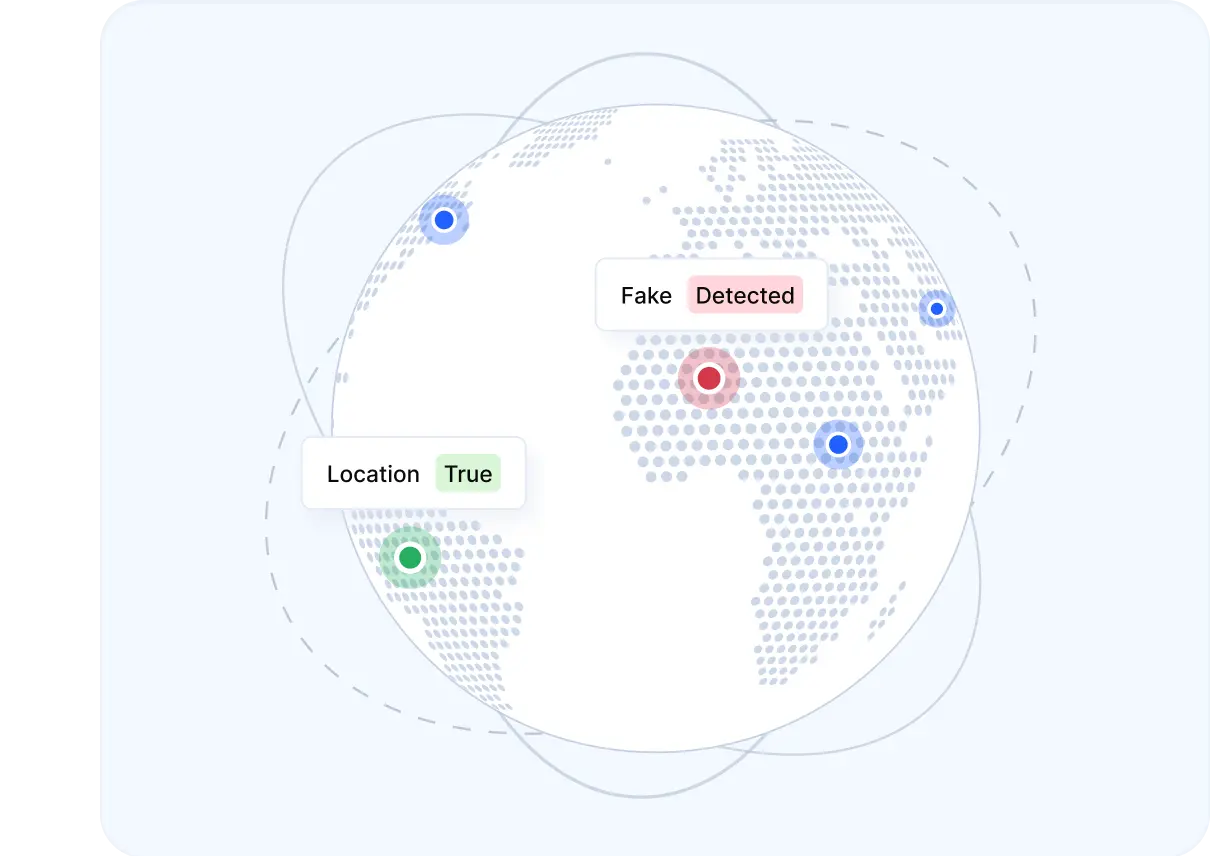
Identify mobile proxies, residential proxies, VPNs, and location spoofing used to evade controls. Verisoul validates where users are truly connecting from using active network forensics and device context.
Leverage consortium intelligence
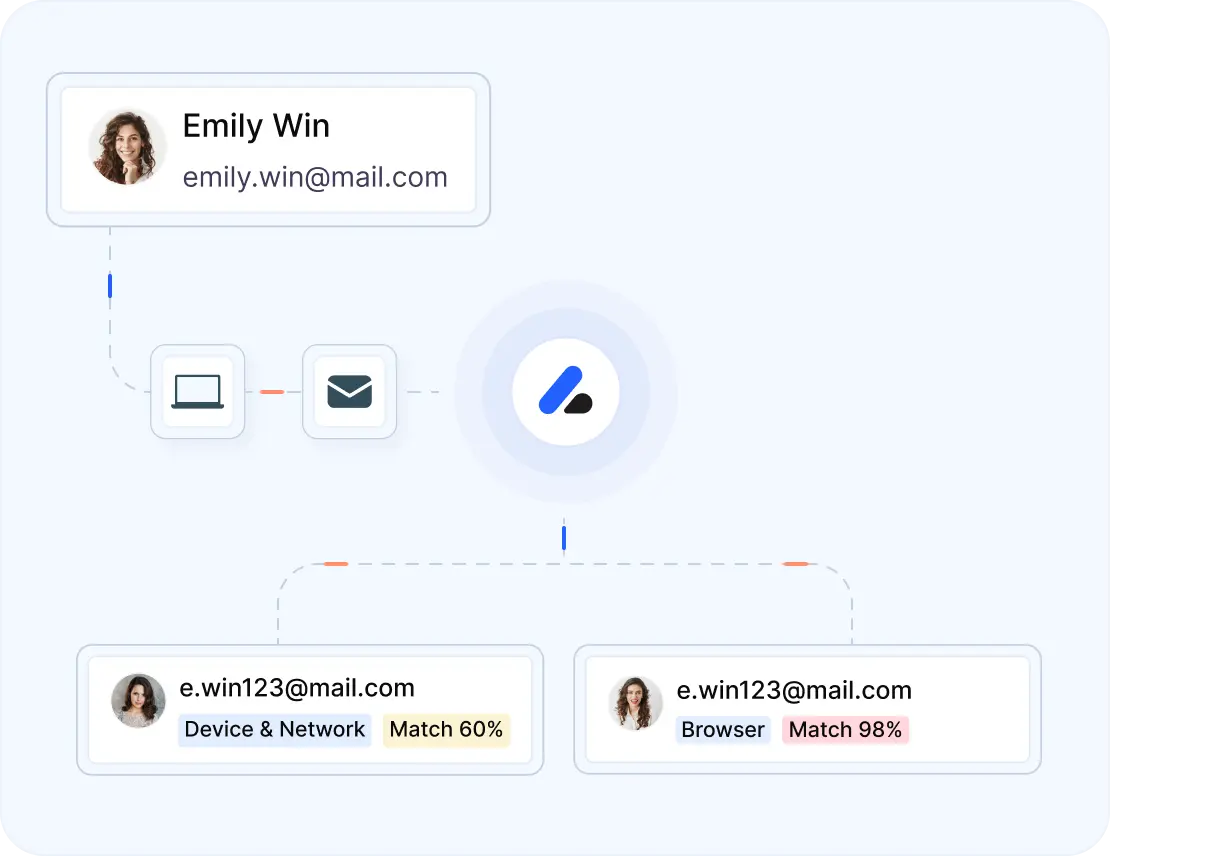
Detect repeat fraudsters faster using cross-customer intelligence. Verisoul surfaces patterns and identities associated with prior abuse, helping financial institutions stop fraud that single-platform tools cannot see.
Detect sophisticated proxy and VPN logins
Identify mobile proxies, residential proxies, VPNs, and location spoofing used to evade controls. Verisoul validates where users are truly connecting from using active network forensics and device context.
FAQs
What types of fraud does Verisoul detect for FinTech and financial services?
What types of fraud does Verisoul detect for FinTech and financial services?
Verisoul detects the most common and costly fraud targeting financial services, including synthetic identities, fake and automated sign-ups, account takeovers, proxy- and VPN-based abuse, location spoofing, bonus and referral abuse, mule activity, and repeat fraudsters.
Verisoul is built to protect the entire financial risk flow — from pre-KYC screening to login and account monitoring — by combining identity intelligence, device forensics, network analysis, behavioral signals, and consortium data into a single real-time risk decision.
How does Verisoul detect fraud before expensive KYC checks?
Verisoul detects high-risk users before KYC is triggered, allowing financial platforms to avoid unnecessary verification costs.
During onboarding, Verisoul evaluates:
- Identity signals associated with synthetic or fake users
- Email and account patterns linked to automated sign-ups
- Device and network behavior indicating farms, emulators, or scripted activity
- Early abuse signals tied to bonus and referral exploitation
This allows teams to block or deprioritize high-risk users early, reserving KYC spend for legitimate customers and improving onboarding efficiency.
How does Verisoul detect account takeover attempts?
Verisoul detects account takeovers by identifying abnormal login behavior and identity changes that indicate compromised accounts.
ATO detection includes:
- Sudden device or environment changes inconsistent with prior behavior
- Impossible travel between login sessions
- Proxy, VPN, or remote access usage during sensitive actions
- Behavioral anomalies that suggest credential stuffing or scripted access
These signals allow teams to stop takeovers before funds move or accounts are misused, without locking out legitimate users.
How does Verisoul catch sophisticated proxy and VPN login attempts?
How does Verisoul catch sophisticated proxy and VPN login attempts?
Verisoul detects mobile proxies, residential proxies, VPNs, and location spoofing commonly used to evade FinTech controls.
Detection techniques include:
- Encrypted traffic pattern analysis to flag proxy tunneling and abnormal packet flows
- Middleman and relay detection, identifying intermediary infrastructure intercepting sessions
- True-location inference, triangulating routing paths, device behavior, and session context to determine actual user geography
- Environmental mismatch analysis, including inconsistencies in language, fonts, keyboard layout, time zone, and OS region
These techniques are critical for detecting cross-border fraud, mule networks, and high-risk login attempts that traditional IP checks miss.
How does Verisoul help prevent bonus and referral abuse?
How does Verisoul help prevent bonus and referral abuse?
Verisoul prevents bonus and referral abuse by identifying coordinated clusters of accounts created to exploit incentives.
Cluster detection includes:
- Device and network reuse across multiple sign-ups
- Behavioral similarity across onboarding and usage
- Identity overlap between seemingly separate users
- Longitudinal tracking across campaigns and promotions
This allows FinTech teams to stop promotion abuse before payouts, protecting growth spend and preventing skewed metrics.
What is consortium intelligence, and how does Verisoul use it?
What is consortium intelligence, and how does Verisoul use it?
Consortium intelligence allows Verisoul to identify fraud patterns and identities that have appeared across multiple customers, rather than relying on a single platform’s data.
This includes:
- Detection of repeat fraudsters who rotate apps, devices, or accounts
- Identification of known abuse infrastructure used across FinTech products
- Early warning signals for emerging fraud techniques
Consortium intelligence helps financial platforms stop fraud earlier and with higher confidence than standalone tools.
Can Verisoul reduce false positives in FinTech onboarding and login flows?
Can Verisoul reduce false positives in FinTech onboarding and login flows?
Yes. Verisoul reduces false positives by analyzing live behavior and context, rather than relying on static rules or IP reputation alone.
Static approaches often misclassify:
- Mobile users
- International customers
- Privacy-forward browsers
- Shared or corporate networks
By using probabilistic identity resolution and contextual scoring, Verisoul allows teams to block more fraud while approving more legitimate users.
Does Verisoul add friction like step-up authentication or challenges?
Does Verisoul add friction like step-up authentication or challenges?
No. Verisoul operates passively and invisibly by default.
All detection runs in real time using device, network, and behavioral signals, allowing teams to block, step up, or monitor users without forcing captchas or unnecessary interruptions during onboarding or login.
How is Verisoul different from traditional FinTech fraud and KYC tools?
How is Verisoul different from traditional FinTech fraud and KYC tools?
Verisoul differs from legacy tools by focusing on early risk detection and signal quality, not just verification.
- KYC vendors verify identity after cost is incurred
- IP-based tools struggle with proxies and location spoofing
- Rule-heavy systems generate false positives and friction
Verisoul acts as a pre-KYC and ongoing risk layer, combining identity, device, network, behavior, and consortium intelligence to improve decisions across the entire customer lifecycle.
Does Verisoul work on mobile apps and desktop web for FinTech products?
Does Verisoul work on mobile apps and desktop web for FinTech products?
Yes. Verisoul works across mobile apps and desktop web, including native iOS and Android apps as well as browser-based FinTech experiences.
Verisoul is designed for mobile-first and cross-platform financial products, and supports real-time fraud detection during onboarding, login, and sensitive account actions without degrading performance or user experience.
Mobile and desktop deployment includes:
- Native iOS and Android SDKs for FinTech apps
- Web and browser-based integrations for desktop onboarding and account access
- Consistent identity and risk signals across platforms, even when users switch devices
This allows FinTech teams to apply one unified risk layer across all user touchpoints.
What additional mobile and device-level fraud signals does Verisoul detect?
What additional mobile and device-level fraud signals does Verisoul detect?
Verisoul detects advanced mobile and device-level abuse signals that traditional FinTech tools often miss.
These signals include:
- App tampering and runtime manipulation, including hooking frameworks and instrumentation tools
- App cloning and repackaged applications used to bypass controls
- Direct integrations with Apple and Google to validate app integrity and confirm devices have not been compromised
- Detection of emulators and virtualized environments commonly used in fraud and account farming
- Remote access and automation tooling, including screen control and scripted interaction
- Compromised device indicators, such as rooted or jailbroken environments
These signals are combined with identity, network, and behavioral context so decisions are high-confidence and low-friction, even in high-risk financial workflows.
Try Verisoul free
Simplify identity verification and secure your workflows with Verisoul — try it for free.


Verisoul announces $9M Series A!

{ "@context": "https://schema.org", "@type": "FAQPage", "mainEntity": [ { "@type": "Question", "name": "What types of fraud does Verisoul detect for FinTech and financial services?", "acceptedAnswer": { "@type": "Answer", "text": "Verisoul detects synthetic identities, fake and automated sign-ups, account takeovers, proxy- and VPN-based abuse, location spoofing, bonus and referral abuse, mule activity, and repeat fraudsters targeting FinTech and financial services. Verisoul protects the full risk flow from pre-KYC screening through login and account monitoring by combining identity intelligence, device forensics, network analysis, behavioral signals, and consortium data into a real-time risk decision." } }, { "@type": "Question", "name": "How does Verisoul detect fraud before expensive KYC checks?", "acceptedAnswer": { "@type": "Answer", "text": "Verisoul detects high-risk users before KYC is triggered by evaluating onboarding risk signals in real time. During sign-up, it assesses identity indicators associated with synthetic users, email and account patterns linked to automation, device and network behavior consistent with farms or emulators, and early abuse signals tied to bonus and referral exploitation. This allows FinTech teams to block or deprioritize risky users early and reserve KYC spend for legitimate customers." } }, { "@type": "Question", "name": "How does Verisoul detect account takeover attempts?", "acceptedAnswer": { "@type": "Answer", "text": "Verisoul detects account takeovers by identifying abnormal login behavior and identity changes that indicate compromised accounts. Signals include sudden device or environment changes inconsistent with prior behavior, impossible travel between sessions, proxy or VPN usage during sensitive actions, remote access tooling indicators, and behavioral anomalies consistent with credential stuffing or scripted access. These signals help stop takeovers before funds move or accounts are misused while minimizing lockouts for legitimate users." } }, { "@type": "Question", "name": "How does Verisoul catch sophisticated proxy and VPN login attempts?", "acceptedAnswer": { "@type": "Answer", "text": "Verisoul detects mobile proxies, residential proxies, VPNs, and location spoofing used to evade FinTech controls. Detection includes encrypted traffic pattern analysis to flag proxy tunneling and abnormal flows, identification of intermediary relay or middleman infrastructure, true-location inference by triangulating routing paths with device and session context, and environmental mismatch analysis such as inconsistencies in language, fonts, keyboard layout, time zone, and OS region. These techniques are critical for detecting cross-border fraud, mule networks, and high-risk access attempts that IP-only checks miss." } }, { "@type": "Question", "name": "How does Verisoul help prevent bonus and referral abuse?", "acceptedAnswer": { "@type": "Answer", "text": "Verisoul prevents bonus and referral abuse by identifying coordinated clusters of accounts created to exploit incentives. It detects device and network reuse across sign-ups, behavioral similarity across onboarding and usage, identity overlap between seemingly separate users, and longitudinal patterns across campaigns and promotions. This allows teams to stop promotion abuse before payouts, protecting growth spend and preserving clean performance metrics." } }, { "@type": "Question", "name": "What is consortium intelligence, and how does Verisoul use it?", "acceptedAnswer": { "@type": "Answer", "text": "Consortium intelligence helps Verisoul identify fraud patterns and abusive identities observed across multiple customers rather than relying on a single platform’s data. It can surface repeat fraudsters who rotate apps, devices, and accounts, identify recurring abuse infrastructure, and provide early warning on emerging fraud techniques. This enables FinTech teams to detect and stop fraud earlier and with higher confidence than standalone approaches." } }, { "@type": "Question", "name": "Can Verisoul reduce false positives in FinTech onboarding and login flows?", "acceptedAnswer": { "@type": "Answer", "text": "Yes. Verisoul reduces false positives by using contextual scoring and live session behavior instead of relying on static rules or IP reputation alone. Static approaches often misclassify mobile users, international customers, privacy-forward browsers, and shared corporate networks. Verisoul uses probabilistic identity resolution and multi-signal context so teams can block more fraud while approving more legitimate users." } }, { "@type": "Question", "name": "Does Verisoul add friction like step-up authentication or challenges?", "acceptedAnswer": { "@type": "Answer", "text": "No. Verisoul operates passively and invisibly by default. Detection runs in real time using identity, device, network, behavioral, and location signals, so teams can block, step up, throttle, or monitor users based on policy without forcing CAPTCHAs or unnecessary interruptions during onboarding or login." } }, { "@type": "Question", "name": "Does Verisoul work on mobile apps and desktop web for FinTech products?", "acceptedAnswer": { "@type": "Answer", "text": "Yes. Verisoul works across mobile apps and desktop web, including native iOS and Android apps and browser-based FinTech experiences. It supports real-time fraud detection during onboarding, login, and sensitive account actions, with consistent identity and risk signals even when users switch devices. This enables a unified risk layer across all user touchpoints without degrading performance or user experience." } }, { "@type": "Question", "name": "What additional mobile and device-level fraud signals does Verisoul detect?", "acceptedAnswer": { "@type": "Answer", "text": "Verisoul detects advanced mobile and device-level abuse signals such as app tampering and runtime manipulation, app cloning and repackaged applications, emulator and virtualized environments, and remote access or automation tooling. Verisoul can also validate app integrity and device trust using direct integrations with Apple and Google, and detect compromised environments such as rooted or jailbroken devices. These signals are combined with identity, network, and behavioral context to produce high-confidence, low-friction decisions for financial workflows." } }, { "@type": "Question", "name": "How is Verisoul different from traditional FinTech fraud and KYC tools?", "acceptedAnswer": { "@type": "Answer", "text": "Verisoul differs from traditional tools by focusing on early risk detection and signal quality across the full customer lifecycle. KYC vendors verify identity after cost is incurred, IP-based tools struggle with proxies and location spoofing, and rule-heavy systems often drive false positives and friction. Verisoul acts as a pre-KYC and ongoing risk layer by combining identity, device, network, behavior, and consortium intelligence into transparent real-time decisions." } } ]
}