Prevent bonus abuse, fraud, and chargebacks on your rewards app
Leading rewarded communities rely on Verisoul to prevent fraud, reduce chargebacks, and grow safely.
TRUSTED BY COMPANIES ACROSS EVERY INDUSTRY

Rewarded Advertising & Mobile Gaming
Benjamin replaces IPQS with Verisoul to lower false positives and win ad partnerships
Lower
false positive rates
Positive
network effects from higher-quality traffic
Use Cases Solved:
False Positive Reduction
Chargeback Prevention
Multi-accounting
Geo-Blocking
Rewarded Advertising & Payments
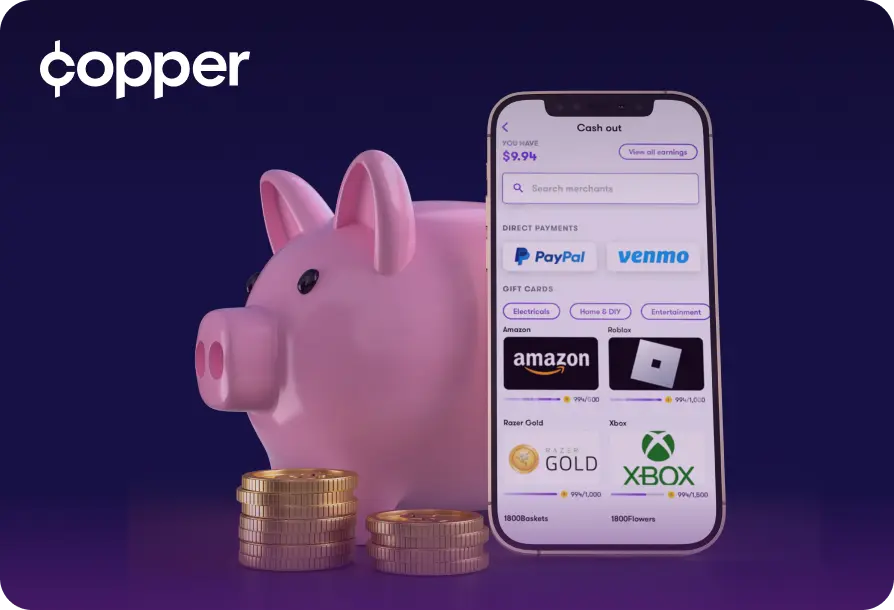
Copper chooses Verisoul over Sardine, Fingerprint, and Socure - cutting reversals by 37%
37%
reduction in fraud reversal rates from partner offer network
76%
reduction in cost vs Sardine, despite being a more accurate solution
Use Cases Solved:
Multi-accounting
Location Spoofing
Mobile Proxies
Verisoul vs. Competitors

Win rate

Customers that chose Verisoul
Key Differentiators:
Fewer false positives (30–50%+)
IPQS relies on static IP blocklists, which frequently misclassify legitimate users. Verisoul analyzes live network traffic, catching only true proxy and VPN activity.
Result: Wiza reduced false positives by 90%; Adscend Media reported a drastic reduction.
Holistic fraud decisions
Verisoul combines network, device, behavioral, email, and cluster-level intelligence into a single risk score, while IPQS surfaces fragmented signals.
Transparent scoring and rules
Customers describe IPQS as a “black box.” Verisoul provides clear, configurable fraud scores and rules teams can trust and tune.
Win rate

Customers that chose Verisoul
Why customers choose Verisoul:
Detects advanced location spoofing
Verisoul uniquely identifies cross-continental device farms and large-scale location fraud that Fingerprint misses.
Broader identity intelligence
Verisoul incorporates email and phone signals alongside device data for stronger identity resolution.
Transparent scoring and rules
Copper selected Verisoul after finding Fingerprint delivered no incremental fraud detection beyond what Verisoul already caught.
Win rate

Customers that chose Verisoul
Key Differentiators:
Detects advanced location spoofing
Verisoul uniquely identifies cross-continental device farms and large-scale location fraud that Sift misses.
Accuracy & Precision
Customers trust Verisoul results, whereas often find Sift has too many false positives to trust.
Intelligence Signals
Verisoul builds in-house signals that encompass the entire user journey, whereas Sift is primarily focused on payment fraud and orchestration.
Win rate
Customers that chose Verisoul
Key Differentiators:
Detects advanced location spoofing
Verisoul uniquely identifies cross-continental device farms and large-scale location fraud that Seon misses.
Fraud signals vs. KYC signals
Verisoul is primarily focused on real-time signals for semi-anonymous users to detect risk & trust levels, whereas Seon is primarily focused on historical user data fit for KYC.
Protect your communities from Fraudsters
Use Verisoul at sign-up, before offers, and at withdrawals to reduce chargeback fraud from your ad and offer partners.
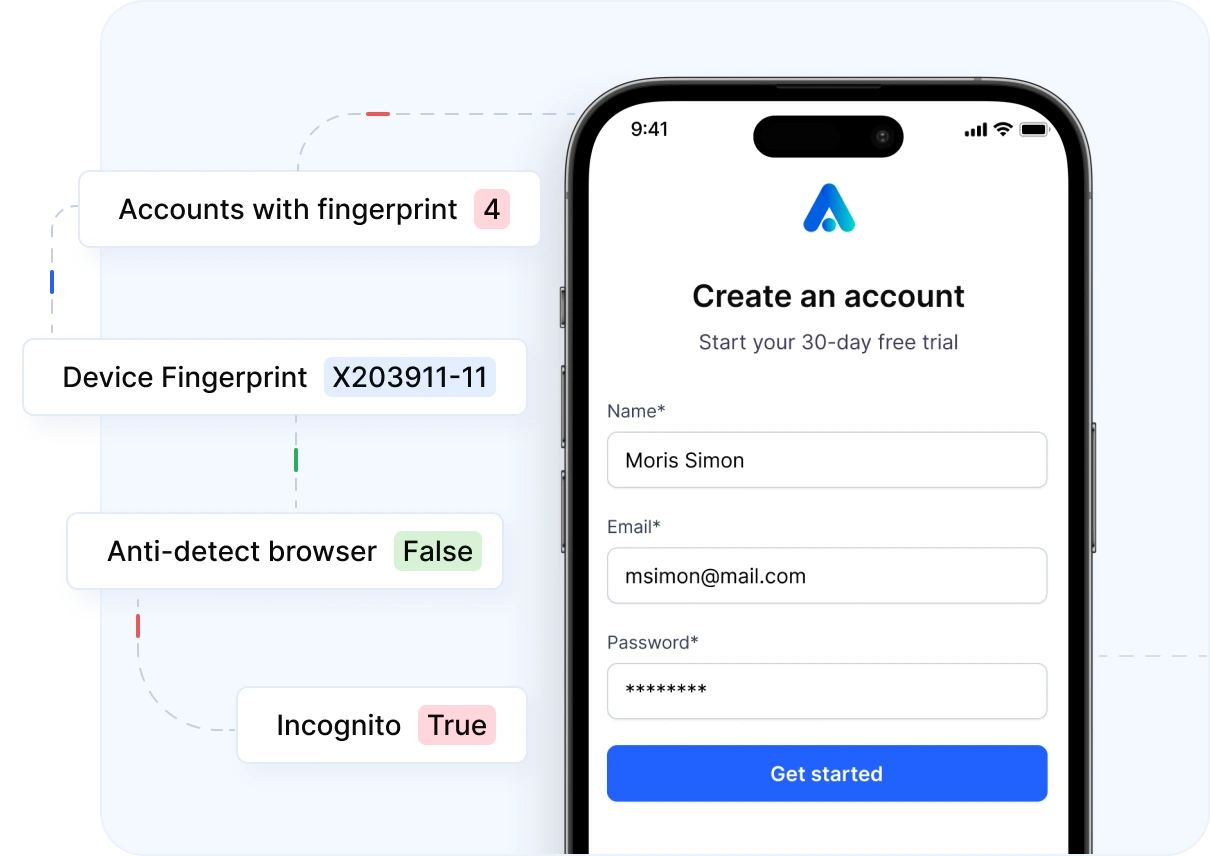
Prevent Fake Signups
Verisoul uses email intelligence and real-time device, network, and behavioral signals to catch fraudsters before they create accounts.
Integrate on Web and Mobile
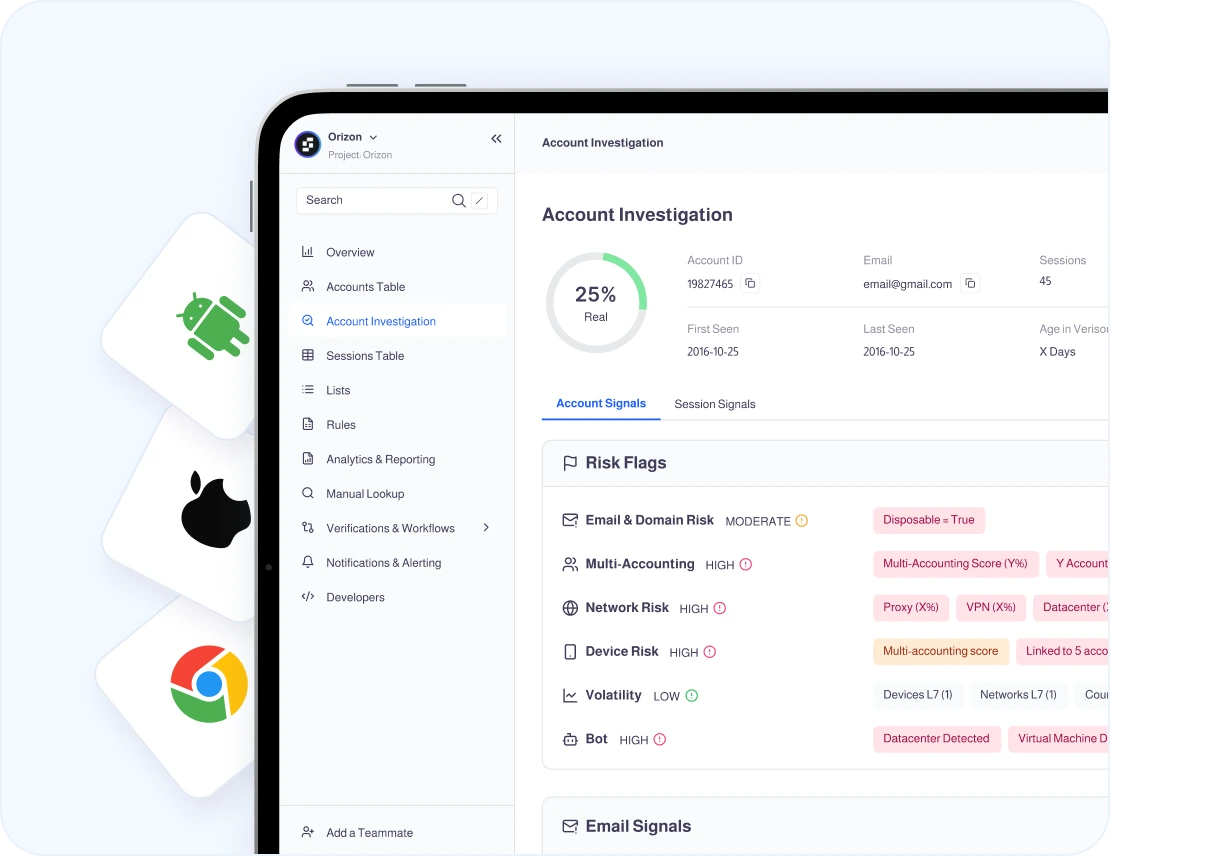
Use Verisoul everywhere your users use your app - seamlessly integrate across iOS, Android, and Web.
Verifications for extra security
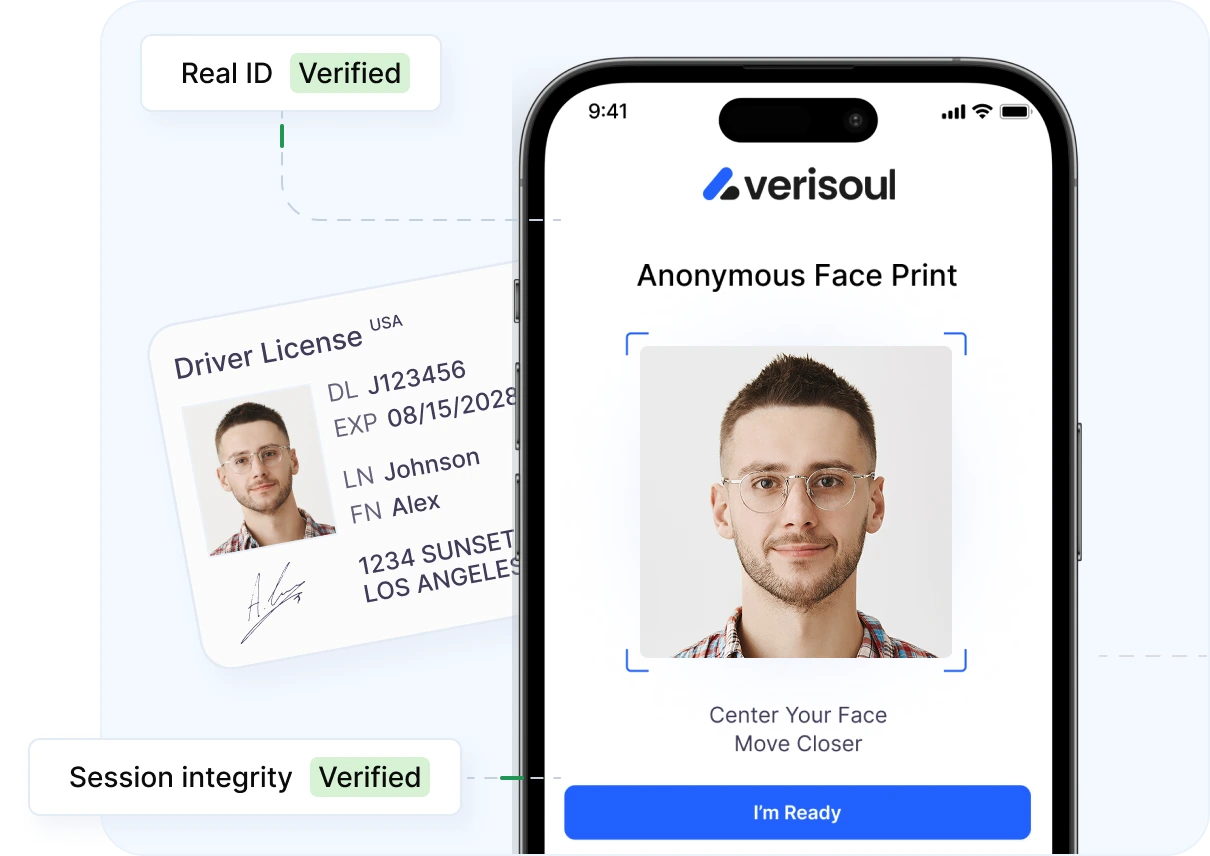
Verisoul’s ID Check and FaceMatch solutions let you add friction at key moments for enhanced security.
Verifications for extra security
Verisoul’s ID Check and FaceMatch solutions let you add friction at key moments for enhanced security.
FAQs
What types of fraud does Verisoul prevent in rewards and incentive apps?
What types of fraud does Verisoul prevent in rewards and incentive apps?
Verisoul prevents the most common and costly fraud seen in rewards, cashback, and incentive-based apps, including fake sign-ups, account farming, device farms, emulator traffic, app cloning, click and offer fraud, location spoofing, bots, and duplicate users.
Verisoul is designed specifically for monetized user actions, where fraudsters attempt to maximize rewards using automation, fake identities, and scaled mobile infrastructure. Detection happens in real time using device, network, behavioral, and identity intelligence.
How does Verisoul stop fake sign-ups and fraudulent accounts at registration?
Verisoul stops fake accounts at sign-up by combining email intelligence, device analysis, and network forensics before a user is allowed to earn rewards.
At registration, Verisoul evaluates:
- Email reputation and history to detect disposable, programmatically generated, or low-trust email accounts
- Duplicate patterns across devices, emails, and sessions
- Network behavior indicating proxy usage or automation
This allows publishers to block low-quality or fraudulent accounts upfront, reducing downstream abuse, reward leakage, and manual reviews.
How does Verisoul’s email intelligence work for rewards apps?
Verisoul uses advanced email intelligence to assess whether an email represents a real, long-term user or a throwaway fraud account.
Email signals include:
- Domain signals and disposable email detection
- Email age, online history, and social presence
- Known abuse indicators and linkage to prior fraud
These signals are combined with device and network context, so decisions are never made on email alone. This is especially effective for rewards apps, where email-based account farming is one of the primary attack vectors.
Can Verisoul verify high-risk users with ID Check and FaceMatch?
Can Verisoul verify high-risk users with ID Check and FaceMatch?
Yes. Verisoul offers ID Check and FaceMatch to verify high-risk users before allowing withdrawals, redemptions, or continued access.
For users flagged as risky, Verisoul can:
- Validate a government-issued ID
- Perform biometric FaceMatch to confirm the user is a real, unique individual
- Ensure one person is not operating multiple reward accounts
These checks are typically used selectively, only when risk thresholds are exceeded, so legitimate users are not burdened unnecessarily.
Does Verisoul work natively on iOS and Android apps?
Does Verisoul work natively on iOS and Android apps?
Yes. Verisoul is built for mobile-first rewards apps and works natively on both iOS and Android.
Verisoul’s mobile SDK supports:
- iOS and Android apps
- Real-time fraud decisions during onboarding and in-app actions
- Passive, low-latency detection without degrading UX
This allows publishers to stop fraud before rewards are earned, not after payouts occur.
How does Verisoul validate real devices on mobile?
How does Verisoul validate real devices on mobile?
Verisoul validates mobile devices using platform-level hardware trust signals and proprietary device intelligence.
Capabilities include:
- Partnerships with Apple and Google to confirm the app and device have not been tampered with
- Device marking, allowing known fraud devices to be permanently flagged
- Detection of emulators, rooted/jailbroken devices, and compromised environments
This ensures rewards are issued only to real physical devices, not virtualized or manipulated ones.
Can Verisoul detect app cloning, hooking, and remote automation?
Can Verisoul detect app cloning, hooking, and remote automation?
Yes. Verisoul detects app cloning, runtime hooking, and remote automation tools commonly used to exploit rewards apps.
Using native mobile signals and behavioral analysis, Verisoul identifies:
- Cloned or repackaged app instances
- Runtime manipulation frameworks
- Remote control and scripted automation
These attacks are especially common in rewards ecosystems, and Verisoul is designed to catch them without relying on brittle signature-based detection.
How does Verisoul use device behavior and sensors to detect fraud?
How does Verisoul use device behavior and sensors to detect fraud?
Verisoul analyzes native device behavior, including accelerometer and interaction signals, to distinguish real users from automated or farmed devices.
Behavioral indicators include:
- Natural motion and orientation patterns
- Touch cadence and interaction timing
- Consistency between physical movement and app usage
This makes it significantly harder for fraudsters to simulate legitimate user behavior at scale.
Can Verisoul help identify good and bad traffic acquisition sources?
Can Verisoul help identify good and bad traffic acquisition sources?
Yes. Verisoul helps rewards app publishers identify which acquisition sources drive high-quality users and which sources generate fraud.
Using Verisoul lists and analytics, publishers can:
- Rank traffic sources by fraud rate and quality
- Identify sources associated with device farms, fake accounts, or reward abuse
- Block or throttle poor-performing sources while scaling trusted partners
This allows teams to optimize spend, improve LTV, and reduce fraud-driven growth illusions.
How is Verisoul different from other fraud tools used by rewards apps?
How is Verisoul different from other fraud tools used by rewards apps?
Verisoul goes beyond basic bot or IP detection by combining mobile-native device validation, active network intelligence, behavioral analysis, and identity verification into one platform.
Most legacy tools rely on static IP lists or server-side checks, which miss modern rewards fraud like mobile device farms, app cloning, and account farming. Verisoul is built to stop real-world abuse at scale, while minimizing false positives and preserving user experience.
Can Verisoul detect mobile and residential proxies and location spoofing in rewards and incentive apps?
Can Verisoul detect mobile and residential proxies and location spoofing in rewards and incentive apps?
Yes. Verisoul is specifically designed to detect mobile proxies, residential proxies, and location spoofing used to exploit rewards, cashback, and incentive-based apps.
Fraudsters often rely on scaled mobile proxy infrastructure and GPS spoofing to simulate legitimate users. Verisoul detects this using:
- Network-level inspection techniques that flag encrypted proxy tunnels and abnormal packet routing
- Detection of intermediary or middleman devices touching traffic, which is common in device farms and proxy-based abuse
- Location piercing and triangulation, correlating network behavior, device movement, and session context to infer a user’s true physical location
- Device and identity consistency signals, including language settings, fonts, keyboard layouts, voice and speech characteristics, and regional OS configurations
By combining these signals, Verisoul can reliably stop location-based reward abuse, multi-account farming, and proxy-driven exploitation before rewards are earned or paid out.

Try Verisoul free
Simplify identity verification and secure your workflows with Verisoul — try it for free.

Verisoul announces $9M Series A!

{ "@context": "https://schema.org", "@type": "FAQPage", "mainEntity": [ { "@type": "Question", "name": "What types of fraud does Verisoul prevent in rewards and incentive apps?", "acceptedAnswer": { "@type": "Answer", "text": "Verisoul prevents rewards-app fraud including fake sign-ups, account farming, device farms, emulator traffic, app cloning, click and offer fraud, location spoofing, bots, and duplicate users. It combines device, network, behavioral, and identity intelligence to stop fraud before rewards are earned or paid out." } }, { "@type": "Question", "name": "How does Verisoul stop fake sign-ups and fraudulent accounts at registration?", "acceptedAnswer": { "@type": "Answer", "text": "Verisoul stops fraudulent accounts at sign-up by evaluating email intelligence, device signals, and active network forensics in real time. It detects disposable or programmatically generated emails, account reuse patterns across devices and sessions, and proxy or automation behavior, enabling rewards apps to block low-trust users before they earn incentives." } }, { "@type": "Question", "name": "How does Verisoul’s email intelligence work for rewards apps?", "acceptedAnswer": { "@type": "Answer", "text": "Verisoul assesses whether an email represents a real user or a throwaway fraud account using signals such as domain and provider reputation, account history indicators, and known abuse patterns. Email signals are combined with device and network context to prevent email-based account farming without relying on email alone." } }, { "@type": "Question", "name": "Can Verisoul verify high-risk users with ID Check and FaceMatch?", "acceptedAnswer": { "@type": "Answer", "text": "Yes. Verisoul offers ID Check and FaceMatch to validate high-risk users before withdrawals, redemptions, or continued access. These checks can confirm a government ID, perform biometric FaceMatch to verify a real unique person, and reduce multi-account abuse, typically triggered only when risk thresholds are exceeded." } }, { "@type": "Question", "name": "Does Verisoul work natively on iOS and Android apps?", "acceptedAnswer": { "@type": "Answer", "text": "Yes. Verisoul is built for mobile-first rewards apps and works natively on iOS and Android. It supports real-time fraud decisions during onboarding and in-app actions, with passive detection designed to protect user experience while stopping fraud before rewards are issued." } }, { "@type": "Question", "name": "How does Verisoul validate real devices on mobile?", "acceptedAnswer": { "@type": "Answer", "text": "Verisoul validates real physical devices using platform trust signals and device intelligence. It can leverage Apple App Attest and Google Play Integrity API to confirm app and device integrity, mark known fraud devices for future blocking, and detect emulators, rooted or jailbroken devices, and compromised environments." } }, { "@type": "Question", "name": "Can Verisoul detect app cloning, hooking, and remote automation?", "acceptedAnswer": { "@type": "Answer", "text": "Yes. Verisoul detects app cloning, runtime hooking, and remote automation commonly used to exploit rewards apps. It uses mobile-native signals and behavioral analysis to identify cloned or repackaged apps, runtime manipulation frameworks, and scripted or remote-controlled activity." } }, { "@type": "Question", "name": "How does Verisoul use device behavior and sensors to detect fraud?", "acceptedAnswer": { "@type": "Answer", "text": "Verisoul analyzes native device behavior, including accelerometer and interaction signals, to distinguish real users from automated or farmed devices. It evaluates motion patterns, touch cadence, and timing consistency, making it difficult for fraudsters to simulate legitimate behavior at scale." } }, { "@type": "Question", "name": "Can Verisoul help identify good and bad traffic acquisition sources for rewards apps?", "acceptedAnswer": { "@type": "Answer", "text": "Yes. Verisoul helps rewards app publishers identify which acquisition sources drive high-quality users and which generate fraud. Using Verisoul lists and analytics, teams can rank sources by fraud rate, detect partners linked to device farms or fake accounts, and block or throttle low-quality sources while scaling trusted ones." } }, { "@type": "Question", "name": "Can Verisoul detect mobile and residential proxies and location spoofing in rewards and incentive apps?", "acceptedAnswer": { "@type": "Answer", "text": "Yes. Verisoul is designed to detect mobile proxies, residential proxies, and location spoofing used to exploit rewards, cashback, and incentive-based apps. It uses network-level inspection techniques to flag encrypted proxy tunnels, detects intermediary devices or services intercepting traffic, and performs location piercing and triangulation to infer a user’s true physical location. Verisoul also analyzes device and identity consistency signals such as language settings, fonts, keyboard layouts, voice and speech characteristics, and regional OS configurations to stop proxy-driven reward abuse and account farming before payouts occur." } }, { "@type": "Question", "name": "How is Verisoul different from other fraud tools used by rewards apps?", "acceptedAnswer": { "@type": "Answer", "text": "Verisoul combines mobile-native device validation, active network intelligence, behavioral analysis, and identity verification in one platform. Unlike tools that rely primarily on static IP lists or server-side checks, Verisoul is designed to detect modern rewards-app abuse such as device farms, account farming, app cloning, and location spoofing with fewer false positives." } } ]
}









.webp)