Stop Fraud Before it Impacts Your Voice, SMS, Email, and Messaging Infrastructure
Leading telecom providers trust Verisoul to block location fraud, ban account clusters, and prevent spam signups
TRUSTED BY COMPANIES ACROSS EVERY INDUSTRY
Verisoul vs. Competitors

Win rate

Customers that chose Verisoul
Key Differentiators:
Fewer false positives (30–50%+)
IPQS relies on static IP blocklists, which frequently misclassify legitimate users. Verisoul analyzes live network traffic, catching only true proxy and VPN activity.
Result: Wiza reduced false positives by 90%; Adscend Media reported a drastic reduction.
Holistic fraud decisions
Verisoul combines network, device, behavioral, email, and cluster-level intelligence into a single risk score, while IPQS surfaces fragmented signals.
Transparent scoring and rules
Customers describe IPQS as a “black box.” Verisoul provides clear, configurable fraud scores and rules teams can trust and tune.
Win rate

Customers that chose Verisoul
Secure your community from fraud without blocking real users
Detects advanced location spoofing
Verisoul uniquely identifies cross-continental device farms and large-scale location fraud that Fingerprint misses.
Broader identity intelligence
Verisoul incorporates email and phone signals alongside device data for stronger identity resolution.
Transparent scoring and rules
Copper selected Verisoul after finding Fingerprint delivered no incremental fraud detection beyond what Verisoul already caught.
Win rate

Customers that chose Verisoul
Key Differentiators:
Detects advanced location spoofing
Verisoul uniquely identifies cross-continental device farms and large-scale location fraud that Seon misses.
Fraud signals vs. KYC signals
Verisoul is primarily focused on real-time signals for semi-anonymous users to detect risk & trust levels, whereas Seon is primarily focused on historical user data fit for KYC.
Protect your communities from Fraudsters
Use Verisoul at sign-up, before offers, and at withdrawals to reduce chargeback fraud from your ad and offer partners.
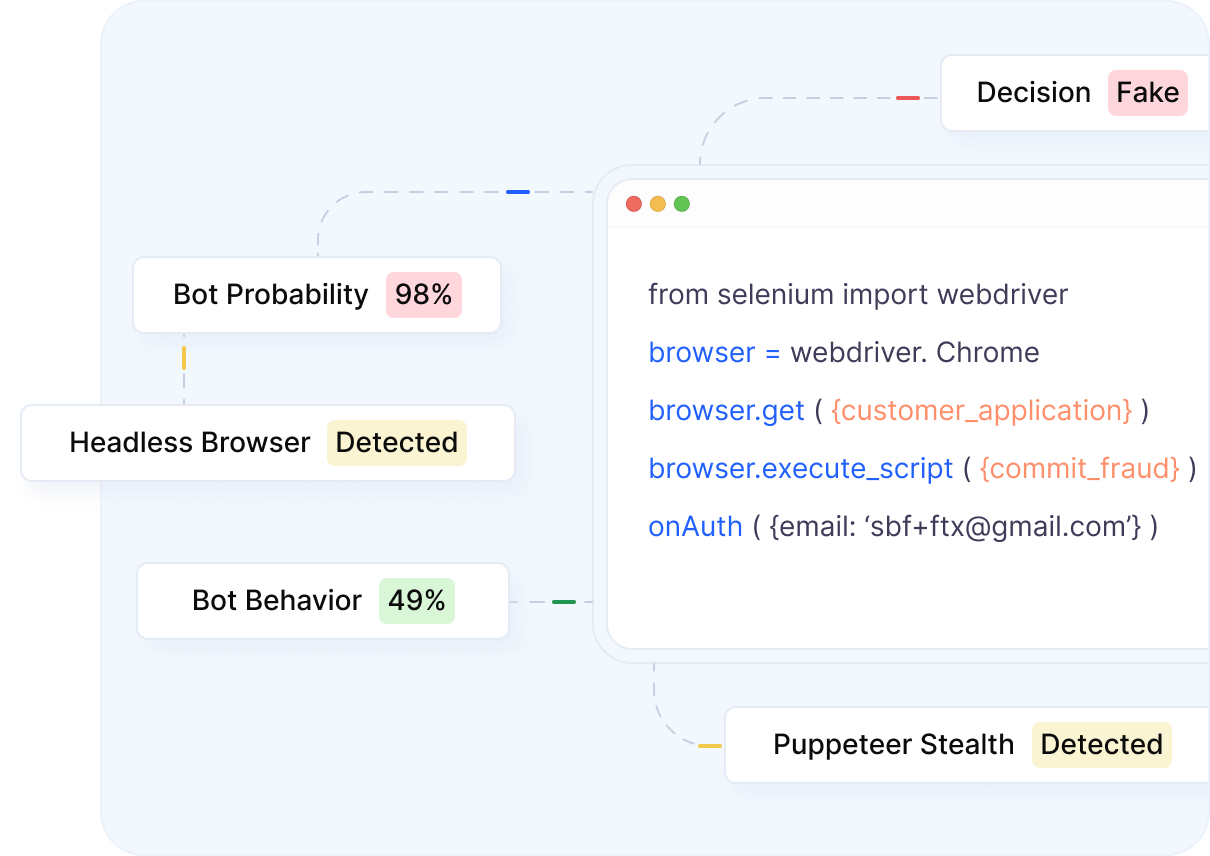
Prevent fake accounts
Stop automated signups and low-trust accounts before they access voice, SMS, or messaging infrastructure. Verisoul evaluates email quality, identity signals, device behavior, and bot activity in real time to block abuse before it creates cost or risk.
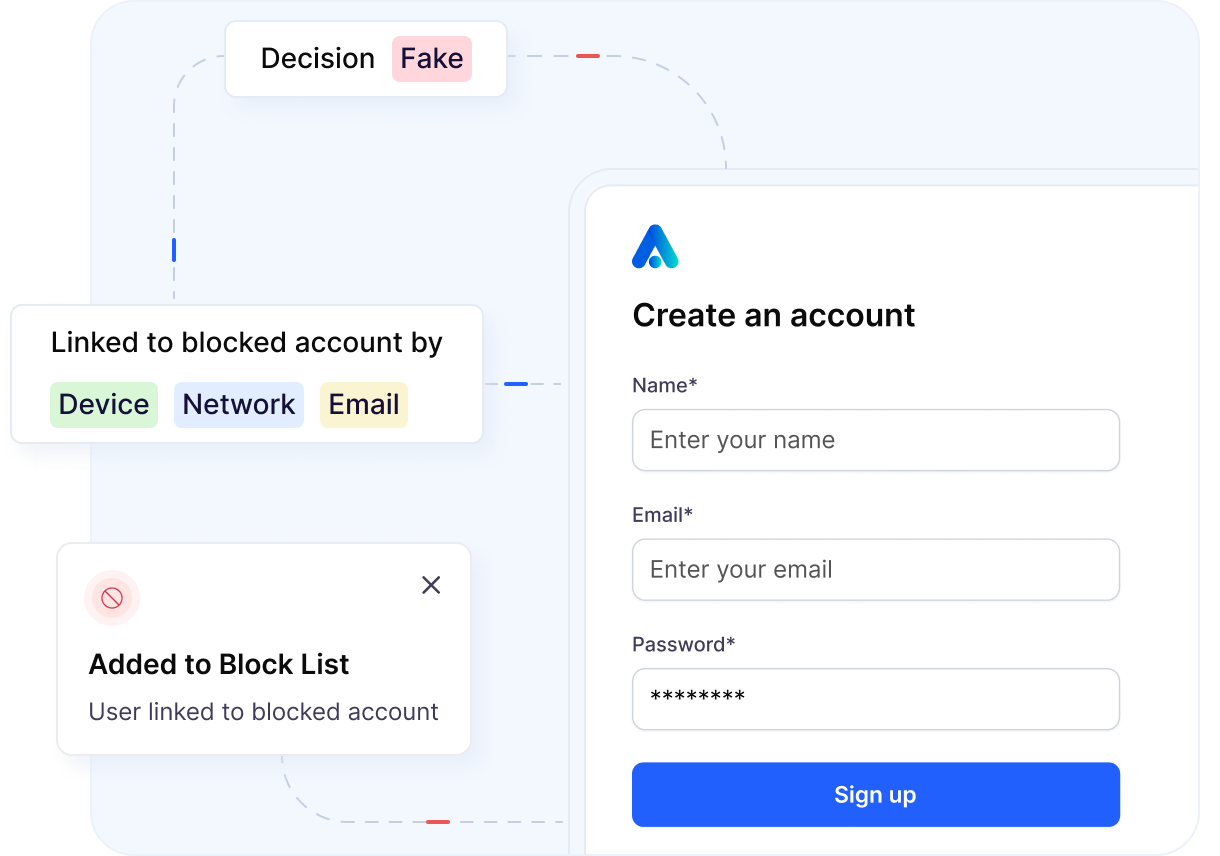
Block repeat spammers
Detect users you have already banned, even when they rotate emails, IPs, or devices. Verisoul links new accounts back to known spammers using identity, device, and network signals.
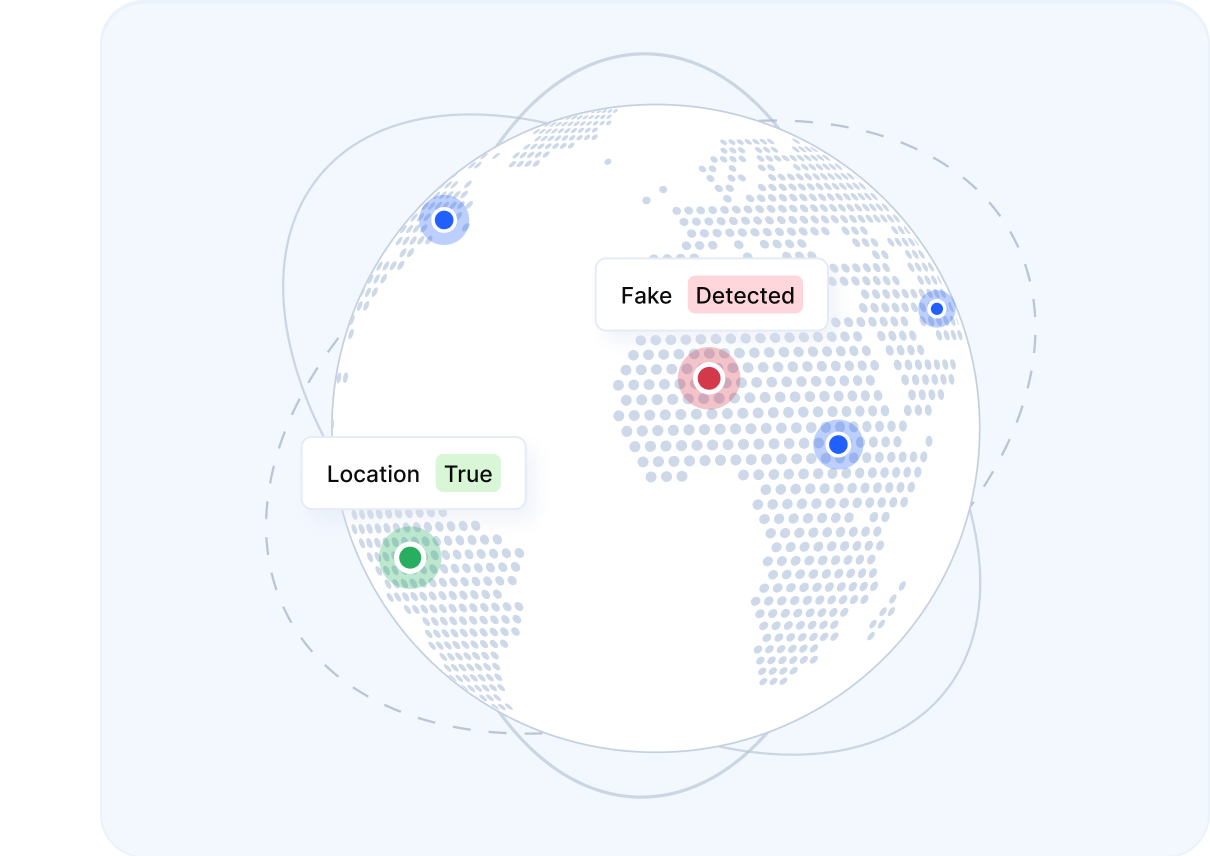
Detect proxies and location fraud
Identify mobile proxies, residential proxies, VPNs, and location spoofing used to bypass geographic and carrier controls. Verisoul uses active network forensics and device context to validate where traffic is truly coming from.
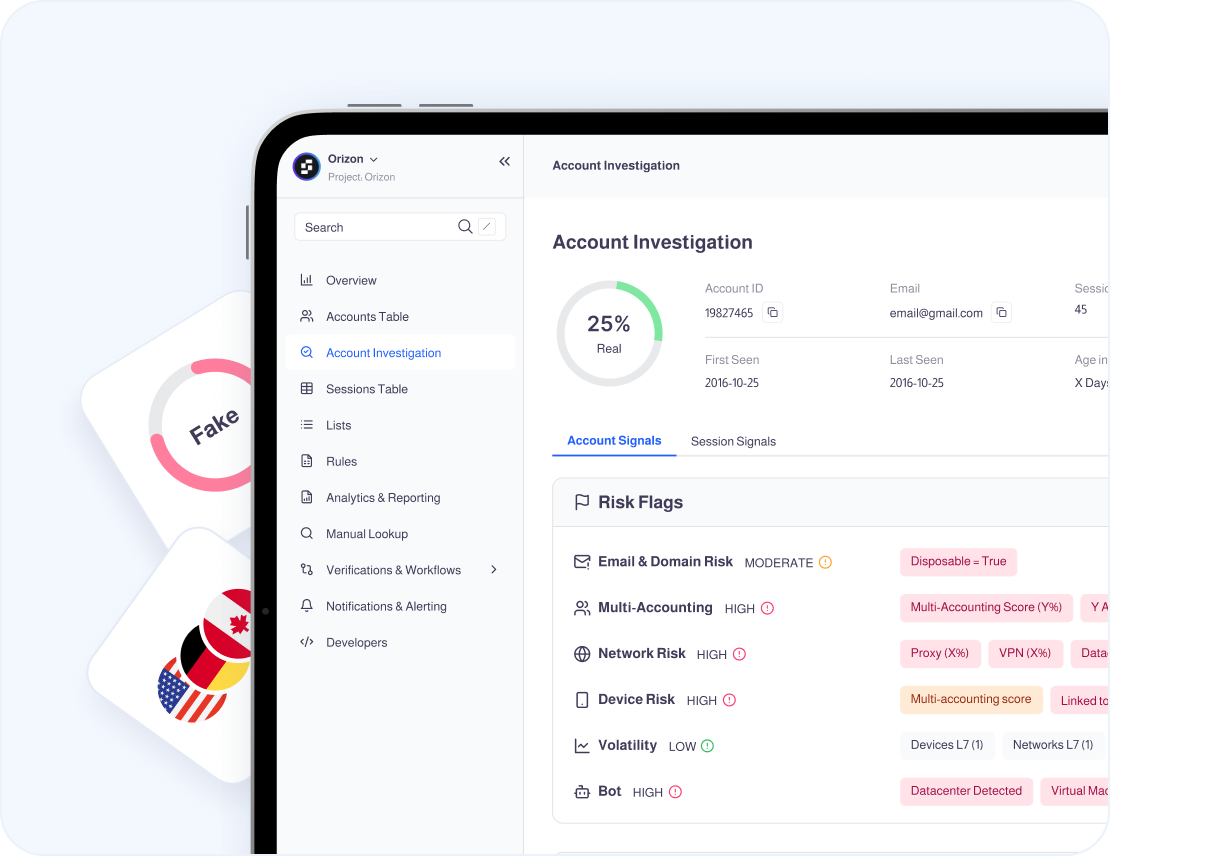
Stay compliant
Maintain a clear audit trail for every fraud decision. Verisoul provides deep signals, scoring, and rationale on each user so teams can explain, review, and defend enforcement actions.
Detect proxies and location fraud
Identify mobile proxies, residential proxies, VPNs, and location spoofing used to bypass geographic and carrier controls. Verisoul uses active network forensics and device context to validate where traffic is truly coming from.
FAQs
What types of fraud does Verisoul prevent for telecom and communications platforms?
What types of fraud does Verisoul prevent for telecom and communications platforms?
Verisoul prevents the most common and costly abuse targeting telecom and communications infrastructure, including fake account creation, automated signups, repeat spammers, proxy-based abuse, location spoofing, traffic pumping, and regulatory evasion.
Verisoul is designed for voice, SMS, email, and communications APIs, where fraud directly creates infrastructure costs, carrier risk, and compliance exposure. Detection happens in real time using identity, device, network, behavioral, and location intelligence.
How does Verisoul prevent fake accounts on telecom platforms?
Verisoul prevents fake accounts by combining email intelligence, identity signals, device analysis, and bot detection before users can access communications infrastructure.
At registration and API access, Verisoul evaluates:
- Email quality and legitimacy, including disposable detection, domain history, and abuse indicators
- Identity signals associated with low-trust or automated account creation
- Device behavior indicating emulators, virtualized environments, or reused devices
- Automation patterns consistent with scripted or programmatic signups
This allows telecom platforms to block high-risk accounts before voice, SMS, or messaging resources are consumed.
How does Verisoul block repeat spammers and previously banned users?
Verisoul blocks repeat spammers by linking new accounts back to identities you have already banned, even when abusers attempt to evade detection.
Reentry detection includes:
- Durable device forensics that persist across resets and configuration changes
- Probabilistic identity resolution across devices, networks, and behavior
- Longitudinal tracking of users over time
- Cross-customer abuse intelligence that surfaces repeat patterns
This prevents spammers from cycling through new emails, IPs, or accounts to regain access.
Can Verisoul detect mobile and residential proxies and location spoofing in telecom traffic?
Can Verisoul detect mobile and residential proxies and location spoofing in telecom traffic?
Yes. Verisoul is designed to detect mobile proxies, residential proxies, VPNs, and location spoofing commonly used to abuse telecom infrastructure.
Fraudsters often use proxy networks and location manipulation to bypass geographic restrictions and carrier controls. Verisoul detects this using:
- Network inspection techniques that flag encrypted proxy tunnels and abnormal packet routing
- Detection of intermediary or middleman devices intercepting or relaying traffic
- Location piercing and triangulation, correlating routing paths, device behavior, and session context to infer a user’s true location
- Environmental consistency checks, including language, fonts, keyboard layout, time zone, and OS region
These techniques allow telecom teams to stop proxy-based abuse and regulatory evasion, even when IP addresses appear residential or mobile.
How does Verisoul help telecom platforms stay compliant?
How does Verisoul help telecom platforms stay compliant?
Verisoul provides a clear audit trail and traceability for every fraud and abuse decision.
For each user or account, Verisoul surfaces:
- Risk scores and contributing signals
- Identity, device, network, and location context
- Decision rationale and enforcement reasoning
This helps telecom teams explain, review, and defend decisions for carrier requirements, regulatory audits, internal reviews, and customer escalations.
Does Verisoul add friction like CAPTCHAs or manual verification?
Does Verisoul add friction like CAPTCHAs or manual verification?
No. Verisoul operates invisibly and does not require CAPTCHAs, SMS challenges, or user-facing verification by default.
All detection runs passively in real time, allowing platforms to stop abuse without degrading signup flows or API performance.
Can telecom platforms control what actions are taken when abuse is detected?
Can telecom platforms control what actions are taken when abuse is detected?
Yes. Verisoul provides risk intelligence and signals, while your team decides how to respond.
Common actions include:
- Blocking or suspending accounts
- Restricting access to voice, SMS, or messaging features
- Applying geographic or usage limits
- Triggering internal review or compliance workflows
This flexibility allows teams to balance fraud prevention, customer experience, and regulatory obligations.
How is Verisoul different from traditional telecom fraud tools?
How is Verisoul different from traditional telecom fraud tools?
Verisoul goes beyond IP reputation and static rules by combining identity resolution, device forensics, active network intelligence, behavioral analysis, and location validation into one platform.
Legacy telecom tools often miss modern abuse driven by automation, proxy networks, and identity rotation. Verisoul is built to stop real-world infrastructure abuse at scale, while minimizing false positives and operational overhead.
Try Verisoul free
Simplify identity verification and secure your workflows with Verisoul — try it for free.


Verisoul announces $9M Series A!

{ "@context": "https://schema.org", "@type": "FAQPage", "mainEntity": [ { "@type": "Question", "name": "What types of fraud does Verisoul prevent for telecom and communications platforms?", "acceptedAnswer": { "@type": "Answer", "text": "Verisoul prevents fake account creation, automated signups, repeat spammers, proxy-based abuse, location spoofing, traffic pumping, and regulatory evasion targeting telecom and communications infrastructure. It is designed for voice, SMS, email, and communications APIs where fraud directly creates infrastructure cost, carrier risk, and compliance exposure, using real-time identity, device, network, behavioral, and location intelligence." } }, { "@type": "Question", "name": "How does Verisoul prevent fake accounts on telecom platforms?", "acceptedAnswer": { "@type": "Answer", "text": "Verisoul prevents fake accounts by combining email intelligence, identity signals, device analysis, and bot detection before users access communications infrastructure. It evaluates email legitimacy, domain history, identity risk indicators, device behavior associated with emulators or reused devices, and automation patterns consistent with scripted signups, allowing telecom platforms to block high-risk accounts before voice, SMS, or messaging resources are consumed." } }, { "@type": "Question", "name": "How does Verisoul block repeat spammers and previously banned users?", "acceptedAnswer": { "@type": "Answer", "text": "Verisoul blocks repeat spammers by linking new accounts back to identities that have already been banned, even when abusers rotate emails, IP addresses, or devices. It uses durable device forensics, probabilistic identity resolution across devices and networks, longitudinal tracking, and cross-customer abuse intelligence to prevent repeat offenders from regaining access." } }, { "@type": "Question", "name": "Can Verisoul detect mobile and residential proxies and location spoofing in telecom traffic?", "acceptedAnswer": { "@type": "Answer", "text": "Yes. Verisoul detects mobile proxies, residential proxies, VPNs, and location spoofing commonly used to abuse telecom infrastructure. It uses network inspection techniques to flag encrypted proxy tunnels and abnormal packet routing, detects intermediary or middleman devices relaying traffic, performs location piercing and triangulation to infer a user’s true location, and analyzes environmental consistency signals such as language, fonts, keyboard layout, time zone, and OS region to stop proxy-based abuse and regulatory evasion." } }, { "@type": "Question", "name": "How does Verisoul help telecom platforms stay compliant?", "acceptedAnswer": { "@type": "Answer", "text": "Verisoul helps telecom platforms stay compliant by providing a clear audit trail and traceability for every fraud and abuse decision. For each user or account, Verisoul surfaces risk scores, contributing identity, device, network, and location signals, and decision rationale, enabling teams to explain, review, and defend enforcement actions for carrier requirements, regulatory audits, and internal reviews." } }, { "@type": "Question", "name": "Does Verisoul add friction like CAPTCHAs or manual verification?", "acceptedAnswer": { "@type": "Answer", "text": "No. Verisoul operates invisibly and does not require CAPTCHAs, SMS challenges, or user-facing verification by default. All detection runs passively in real time, allowing telecom platforms to stop abuse without degrading signup flows, API performance, or customer experience." } }, { "@type": "Question", "name": "Can telecom platforms control what actions are taken when abuse is detected?", "acceptedAnswer": { "@type": "Answer", "text": "Yes. Verisoul provides risk intelligence and signals while telecom platforms control enforcement. Teams can block or suspend accounts, restrict access to voice, SMS, or messaging features, apply geographic or usage limits, or trigger internal review and compliance workflows based on their policies." } }, { "@type": "Question", "name": "How is Verisoul different from traditional telecom fraud tools?", "acceptedAnswer": { "@type": "Answer", "text": "Verisoul goes beyond IP reputation and static rules by combining identity resolution, device forensics, active network intelligence, behavioral analysis, and location validation into a single platform. Traditional telecom fraud tools often miss modern abuse driven by automation, proxy networks, and identity rotation, while Verisoul is built to stop real-world infrastructure abuse at scale with low false positives." } } ]
}