Leading trust & safety teams rely on Verisoul to detect account clusters, banned users, and spam signups without false positives
TRUSTED BY COMPANIES ACROSS EVERY INDUSTRY



PlanHub

“We’re more confident than ever in the quality of our community as we continue to build a marketplace that our users can trust”
Read full story


Construction Marketplace (Two-sided)
PlanHub blocks 11.3% more spam and fraud while keeping false positives at 0.5%
11.3%
more fraud blocked using Verisoul
Use Cases Solved:
Marketplace Trust & Safety
Spam & Scams
Disposable Domains
Multi-accounting
Verisoul vs. Competitors
Win rate

Customers that chose Verisoul
Key Differentiators:
No Friction
Verisoul removes fraudsters automatically without adding time-consuming captchas
Beyond Bot detection
Arkose focuses primarily on bots. Verisoul covers bots, duplicates, location spoofing, device farms, and proxy-based fraud in one platform.
Win rate

Customers that chose Verisoul
Secure your community from fraud without blocking real users
Detects advanced location spoofing
Verisoul uniquely identifies cross-continental device farms and large-scale location fraud that Fingerprint misses.
Broader identity intelligence
Verisoul incorporates email and phone signals alongside device data for stronger identity resolution.
Transparent scoring and rules
Copper selected Verisoul after finding Fingerprint delivered no incremental fraud detection beyond what Verisoul already caught.
Protect your communities from Fraudsters
Use Verisoul at sign-up, before offers, and at withdrawals to reduce chargeback fraud from your ad and offer partners.
Block spam and bot signups
Prevent bots, scripted signups, and spam farms at account creation. Verisoul detects automation and fake identities in real time so your community stays human and growth remains clean.
Detect banned users
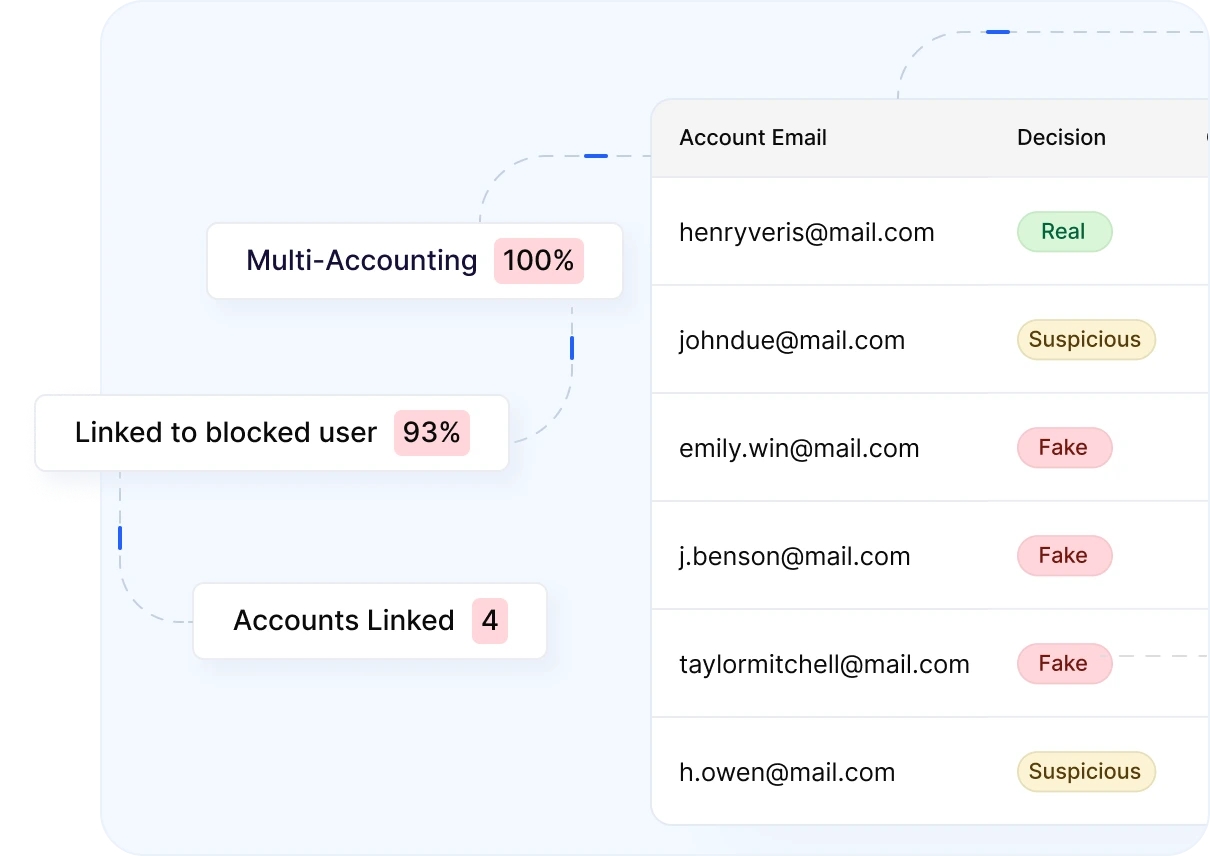
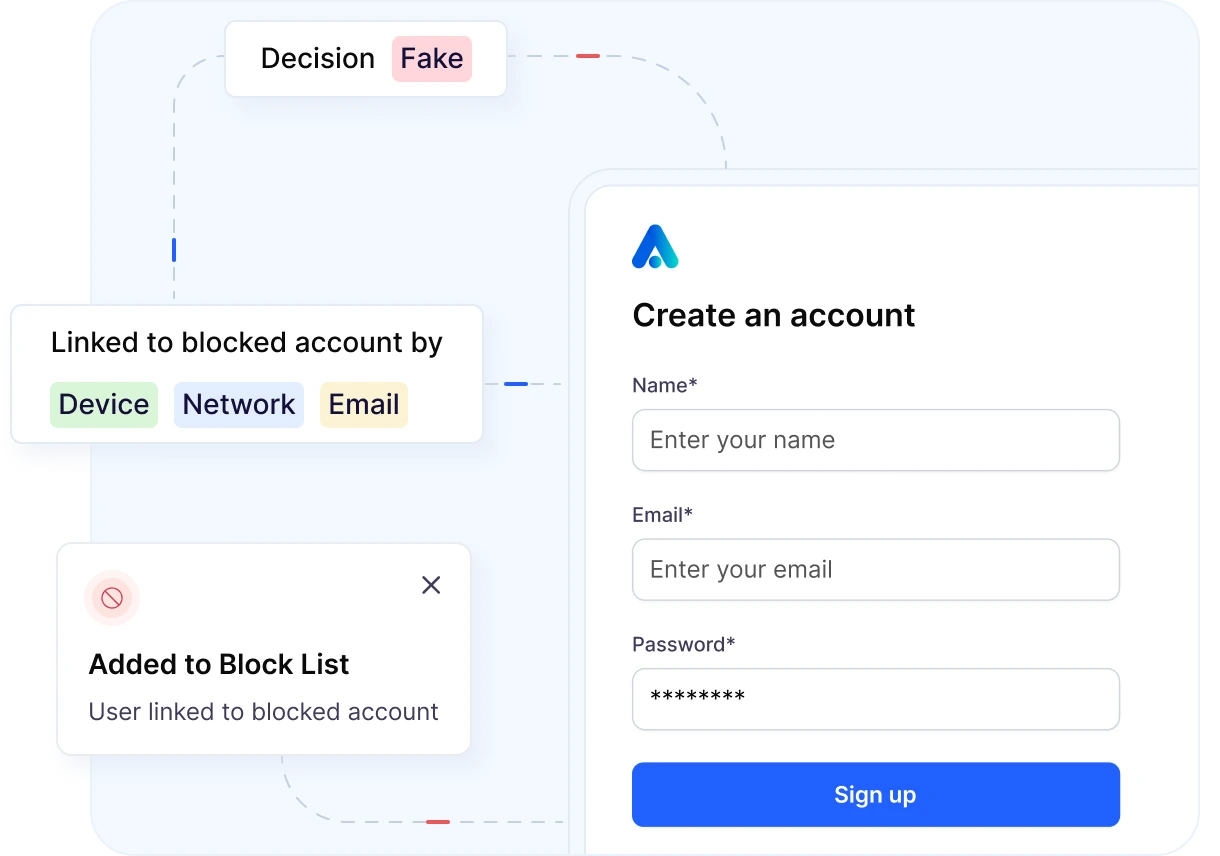
Keep repeat offenders out even when they rotate devices, emails, or IP addresses. Verisoul links re-registration attempts back to known bad actors using durable identity signals.
Spot account clusters
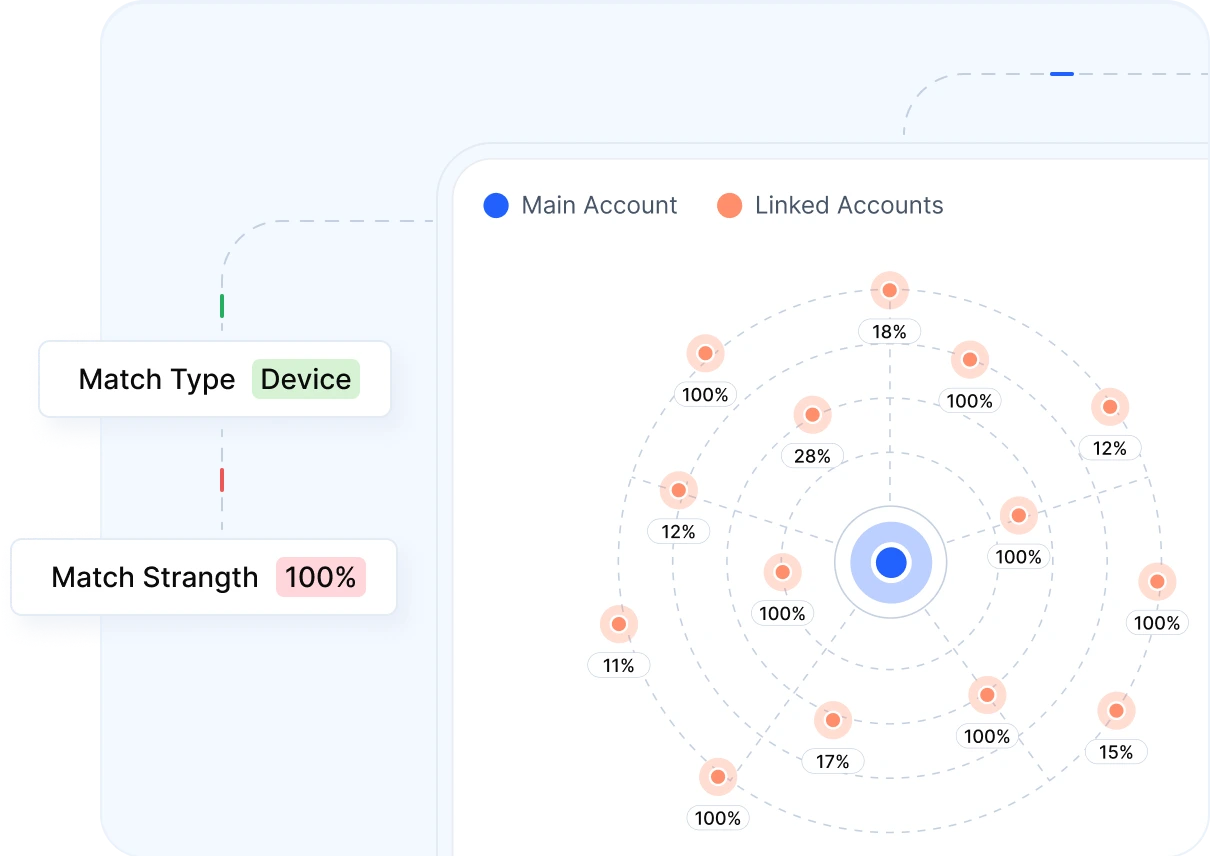
Identify coordinated rings creating accounts to scam users, manipulate engagement, or abuse incentives. Verisoul detects clusters across devices, networks, behavior, and signup patterns to stop fraud at the source.
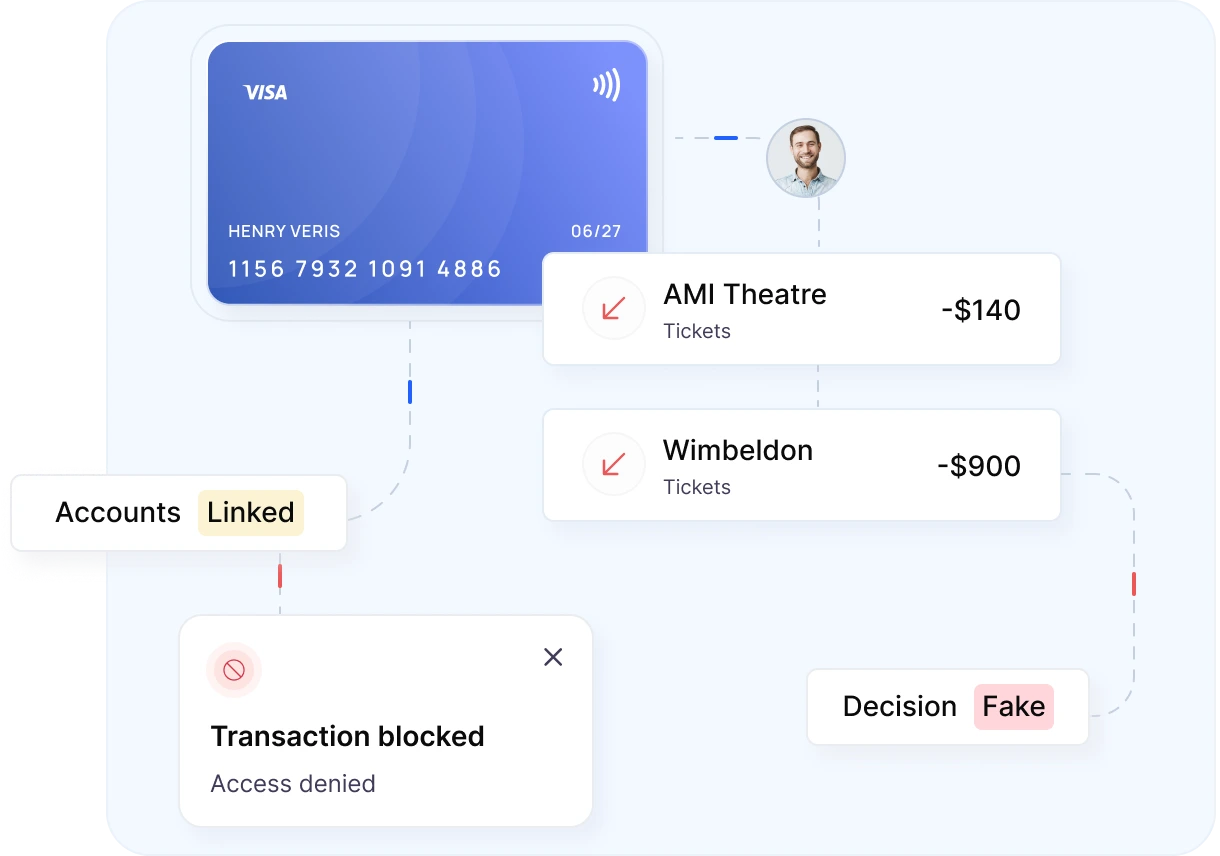
Prevent payment fraud
Stop stolen cards, refund abuse, and promotion exploitation before money moves. Verisoul detects high-risk payments by linking identity, device, and network signals and identifying location spoofing, which is a major indicator of payment fraud, without adding checkout friction.
Spot account clusters
Identify coordinated rings creating accounts to scam users, manipulate engagement, or abuse incentives. Verisoul detects clusters across devices, networks, behavior, and signup patterns to stop fraud at the source.
FAQs
What types of fraud does Verisoul prevent for marketplaces and social platforms?
What types of fraud does Verisoul prevent for marketplaces and social platforms?
Verisoul prevents the most common and costly fraud affecting marketplaces and social platforms, including spam and bot signups, account farming, banned user reentry, account clustering, location spoofing, mobile and residential proxy abuse, and payment fraud.
Verisoul is designed for two-sided and user-generated platforms, where fraudsters create networks of accounts to scam users, manipulate engagement, abuse incentives, and commit payment fraud. Detection happens in real time using device, network, behavioral, and identity intelligence.
How does Verisoul block spam and bot signups on marketplaces and social platforms?
Verisoul blocks spam and bot signups at registration by combining automation detection, device forensics, and network intelligence before accounts are created.
At signup, Verisoul evaluates:
- Behavioral patterns that indicate scripted or non-human interaction
- Device processing signals that identify emulators, virtualized environments, and reused devices
- Network behavior associated with proxies, VPNs, and automated infrastructure
This allows platforms to stop fake accounts and spam farms upfront, protecting communities and reducing downstream moderation costs.
How does Verisoul detect banned users who try to return?
Verisoul detects banned users by linking new accounts back to previously removed identities, even when fraudsters attempt to evade detection.
Verisoul identifies reentry attempts using:
- Device forensics that persist across resets and configuration changes
- Probabilistic identity resolution across devices, networks, and behavior
- Longitudinal tracking of users over time
- Cross-customer identity intelligence that detects repeat abuse patterns
This prevents repeat offenders from cycling through accounts using new emails, devices, or IP addresses.
How does Verisoul identify account clusters and coordinated fraud rings?
How does Verisoul identify account clusters and coordinated fraud rings?
Verisoul identifies account clusters by detecting groups of related accounts acting in coordination, rather than evaluating accounts in isolation.
Cluster detection includes:
- Shared or related devices and device networks
- Overlapping behavioral patterns and activity timing
- Signup and usage patterns consistent with organized abuse
- Network infrastructure reuse across accounts
This allows marketplaces and social platforms to stop scam rings, fake engagement, and incentive abuse that single-account rules and IP matching cannot catch.
How does Verisoul prevent payment fraud in marketplaces?
How does Verisoul prevent payment fraud in marketplaces?
Verisoul prevents payment fraud by validating who is transacting, from what device, and from which real location before money moves.
Payment fraud detection includes:
- Location spoofing detection, which is a major red flag in payment abuse
- Identification of mobile and residential proxy usage
- Abnormal device and network behavior tied to stolen cards
- Linkage between payment attempts and known abusive identities
This allows platforms to stop stolen card usage, refund abuse, and promotion exploitation without adding checkout friction.
Does Verisoul detect mobile and residential proxies?
Does Verisoul detect mobile and residential proxies?
Yes. Verisoul detects mobile proxies, residential proxies, and VPN-based abuse commonly used to bypass marketplace and social platform controls.
Verisoul uses active network forensics, not static IP blocklists, to analyze:
- Live session routing and tunneling behavior
- Middleman and proxy infrastructure indicators
- Location consistency between device, network, and activity
This allows Verisoul to detect previously unseen proxy infrastructure, which is critical for stopping account abuse, payment fraud, and location spoofing.
How does Verisoul detect location spoofing and geolocation fraud?
How does Verisoul detect location spoofing and geolocation fraud?
Verisoul detects location spoofing by validating whether a user’s reported location aligns with device behavior, network routing, and session context.
Location fraud signals include:
- GPS and network mismatches
- Proxy and VPN-based routing inconsistencies
- Impossible travel between sessions
- Remote or tunneled environments
Location spoofing is a strong indicator of payment fraud, scam activity, and account abuse, and Verisoul is designed to catch it in real time.
Does Verisoul add friction like CAPTCHAs or verification challenges?
Does Verisoul add friction like CAPTCHAs or verification challenges?
No. Verisoul operates invisibly and does not require CAPTCHAs, SMS verification, or user-facing challenges.
All detection runs passively using device, behavioral, and network signals, allowing platforms to stop abuse while preserving signup conversion, engagement, and checkout performance.
Can marketplaces and social platforms control what actions are taken when fraud is detected?
Can marketplaces and social platforms control what actions are taken when fraud is detected?
Yes. Verisoul provides fraud intelligence and risk signals, while platforms decide how to respond.
Common actions include:
- Blocking or removing accounts
- Restricting features or messaging
- Preventing payments or withdrawals
- Triggering additional review or verification flows
This flexibility allows Trust & Safety and Payments teams to balance fraud prevention, growth, and user experience.
Try Verisoul free
Simplify identity verification and secure your workflows with Verisoul — try it for free.

Verisoul announces $9M Series A!

{ "@context": "https://schema.org", "@type": "FAQPage", "mainEntity": [ { "@type": "Question", "name": "What types of fraud does Verisoul prevent for marketplaces and social platforms?", "acceptedAnswer": { "@type": "Answer", "text": "Verisoul prevents spam and bot signups, account farming, banned user reentry, account clustering, location spoofing, mobile and residential proxy abuse, and payment fraud on marketplaces and social platforms. It is designed for two-sided and user-generated platforms where fraudsters create coordinated networks of accounts to scam users, manipulate engagement, abuse incentives, and commit payment fraud, using real-time device, network, behavioral, and identity intelligence." } }, { "@type": "Question", "name": "How does Verisoul block spam and bot signups on marketplaces and social platforms?", "acceptedAnswer": { "@type": "Answer", "text": "Verisoul blocks spam and bot signups at registration by combining automation detection, device forensics, and network intelligence before accounts are created. It evaluates behavioral patterns indicating scripted interaction, device processing signals that reveal emulators or virtualized environments, and network behavior associated with proxies or automated infrastructure to stop fake accounts upfront." } }, { "@type": "Question", "name": "How does Verisoul detect banned users who try to return?", "acceptedAnswer": { "@type": "Answer", "text": "Verisoul detects banned users by linking new accounts back to previously removed identities, even when fraudsters rotate emails, devices, or IP addresses. It uses device forensics, probabilistic identity resolution, longitudinal tracking, and cross-customer identity intelligence to prevent repeat offenders from reentering platforms." } }, { "@type": "Question", "name": "How does Verisoul identify account clusters and coordinated fraud rings?", "acceptedAnswer": { "@type": "Answer", "text": "Verisoul identifies account clusters by detecting groups of related accounts that share devices, networks, behavior, or timing patterns. This allows marketplaces and social platforms to stop scam rings, fake engagement, and incentive abuse that cannot be detected by single-account rules or basic IP matching." } }, { "@type": "Question", "name": "How does Verisoul prevent payment fraud in marketplaces?", "acceptedAnswer": { "@type": "Answer", "text": "Verisoul prevents payment fraud by validating who is transacting, from which device, and from what real location before money moves. It detects stolen card usage, refund abuse, and promotion exploitation by identifying location spoofing, mobile and residential proxy usage, abnormal device behavior, and linkage to known abusive identities, without adding checkout friction." } }, { "@type": "Question", "name": "Does Verisoul detect mobile and residential proxies?", "acceptedAnswer": { "@type": "Answer", "text": "Yes. Verisoul detects mobile proxies, residential proxies, and VPN-based abuse used to bypass marketplace and social platform controls. It uses active network forensics rather than static IP blocklists to analyze live session routing, tunneling behavior, and proxy infrastructure, including previously unseen proxy networks commonly used for account abuse and payment fraud." } }, { "@type": "Question", "name": "How does Verisoul detect location spoofing and geolocation fraud?", "acceptedAnswer": { "@type": "Answer", "text": "Verisoul detects location spoofing by validating whether a user’s reported location aligns with device behavior, network routing, and session context. It identifies GPS and network mismatches, proxy or VPN routing inconsistencies, impossible travel between sessions, and remote or tunneled environments, which are strong indicators of payment fraud and account abuse." } }, { "@type": "Question", "name": "Does Verisoul add friction like CAPTCHAs or verification challenges?", "acceptedAnswer": { "@type": "Answer", "text": "No. Verisoul operates invisibly and does not require CAPTCHAs, SMS verification, or user-facing challenges. All detection runs passively in real time using device, behavioral, and network signals, preserving signup conversion, engagement, and checkout performance." } }, { "@type": "Question", "name": "Can marketplaces and social platforms control what actions are taken when fraud is detected?", "acceptedAnswer": { "@type": "Answer", "text": "Yes. Verisoul provides fraud intelligence and risk signals, while platforms decide how to respond. Teams can block or remove accounts, restrict features, prevent payments or withdrawals, or trigger additional review or verification flows based on their Trust and Safety and payments policies." } }, { "@type": "Question", "name": "How is Verisoul different from other fraud tools used by marketplaces and social platforms?", "acceptedAnswer": { "@type": "Answer", "text": "Verisoul goes beyond basic bot or IP detection by combining device forensics, active network intelligence, behavioral analysis, and identity resolution into a single platform. Legacy tools rely on static IP lists or surface-level checks and miss modern abuse like account clustering, proxy-based fraud, and banned user reentry, while Verisoul is built to stop organized abuse at scale with low false positives." } } ]
}