User Platforms


Transactions & Finance


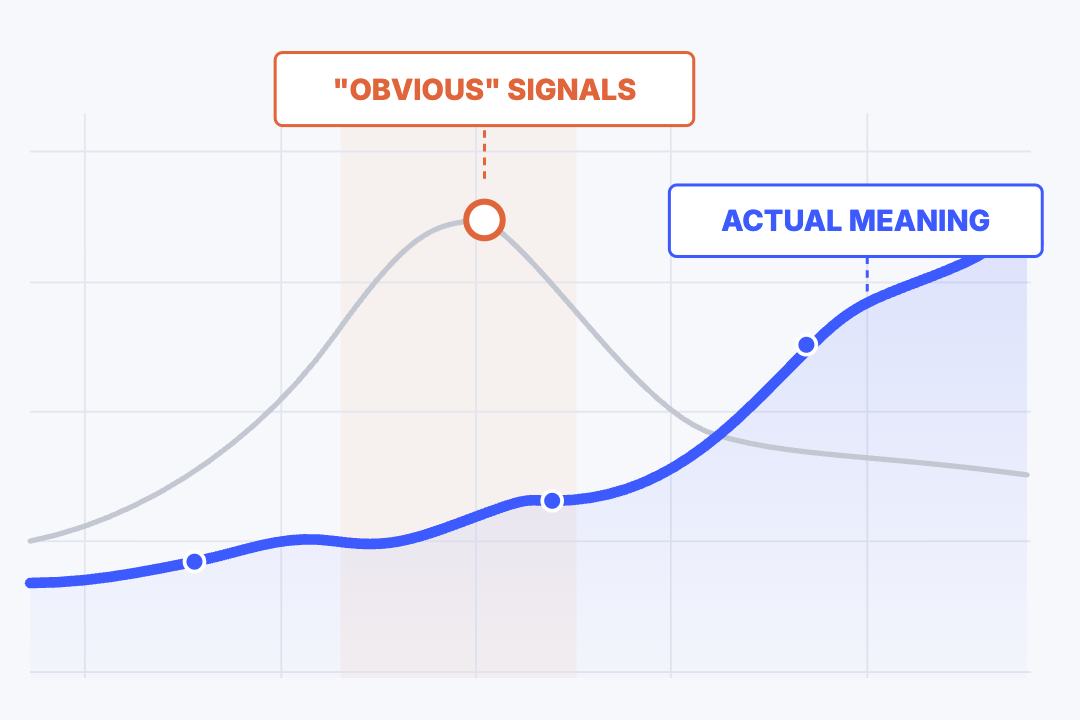

Every few weeks I pull something weird out of our survey fraud data, make a chart, and post it on LinkedIn. Looking back at Q3, almost every post started with an assumption I would have bet on. Then the data talked me out of it.
The real giveaways are more specific than "Chinese device" or "VPN user." And you all made that clearer in the comments, where a few posts turned into actual debates! Here's every chart, the short version, and the best of what the market research community said back.
New York City is the greatest survey-taking city in the U.S. From Albuquerque to Zephyrhills, most cities take more surveys, with better quality, during the day, and far fewer, far worse ones at night.
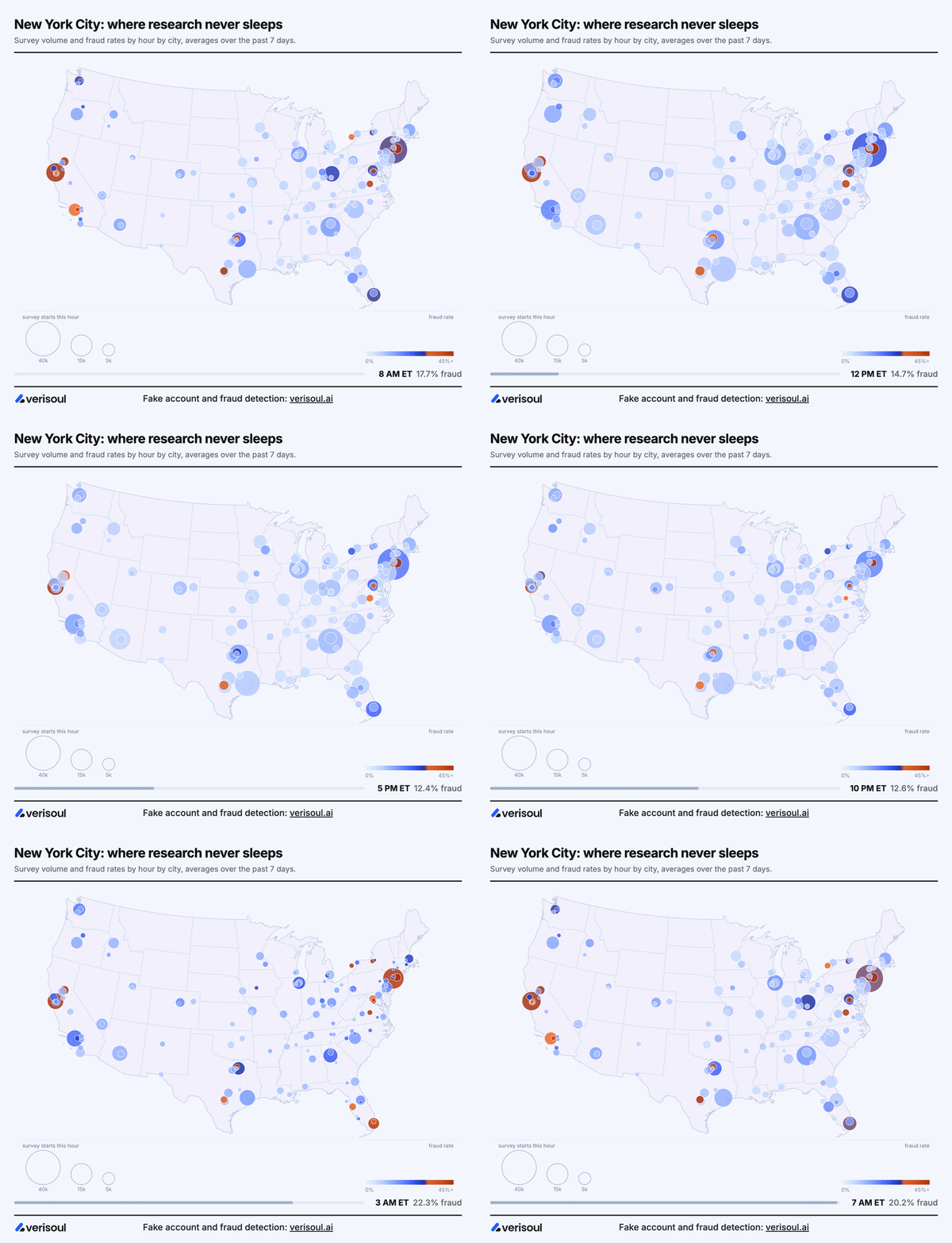
NYC barely slows down. At 4 AM, its slowest hour, it fields about as many survey starts as Dallas and Philadelphia at their afternoon peaks. The quality at 4 AM? Not so good. Data center towns like Ashburn, Virginia skip the cycle entirely: steady volume, sky-high fraud, all day.
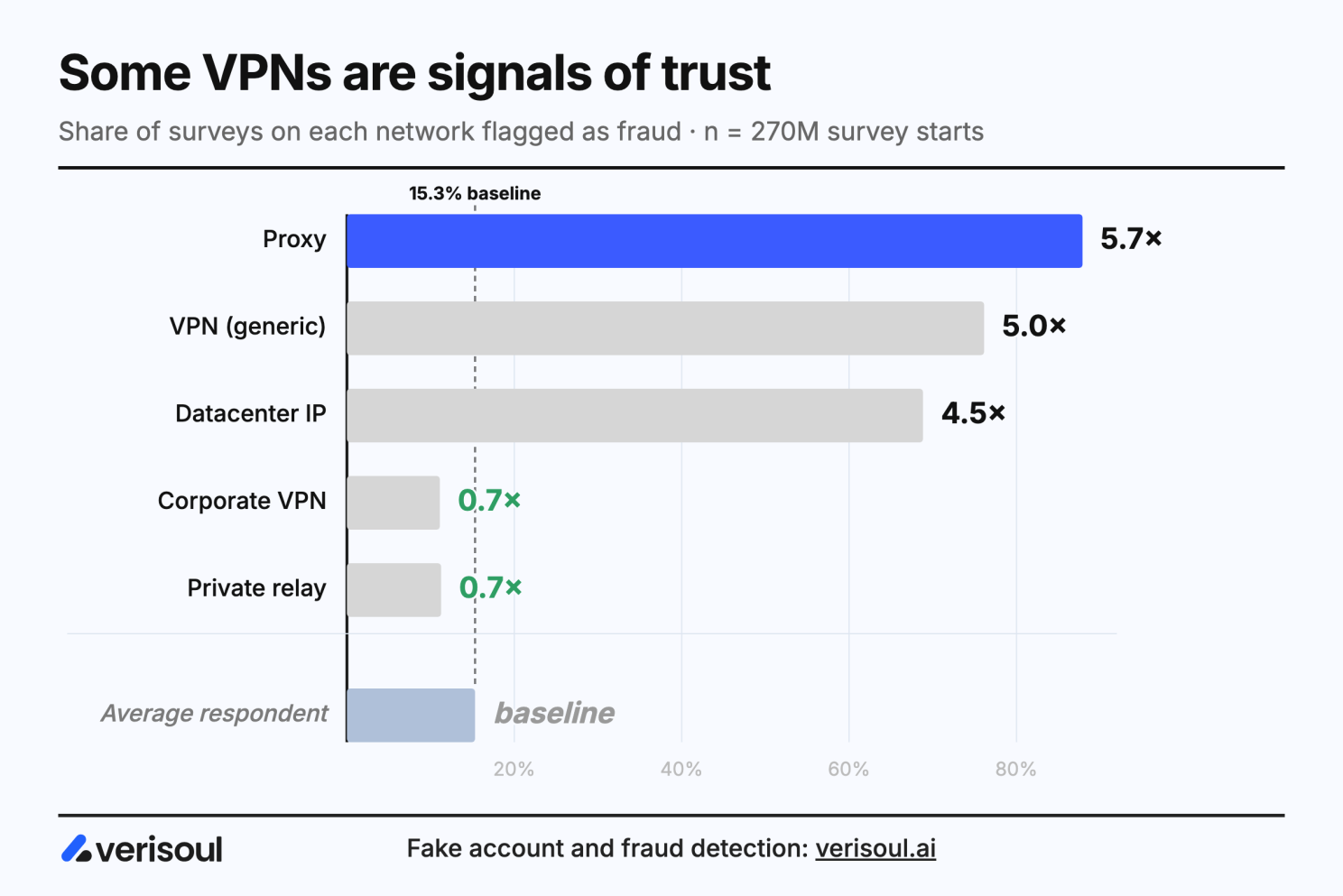
Should you block every VPN user? Nope! Across 270M survey starts, proxies sit at one extreme: cheap, disposable tools for spoofing location. Corporate VPNs and private relays sit at the other, and their users are higher quality on average. Privacy without spoofing usually means a legitimate respondent. Spoofing across continents is the red flag.
Usually, but don’t block them all. A blanket proxy block will introduce some false positives. (For example, university and corporate proxies have very legit reasons to exist.) This question was a hot topic in the comments.
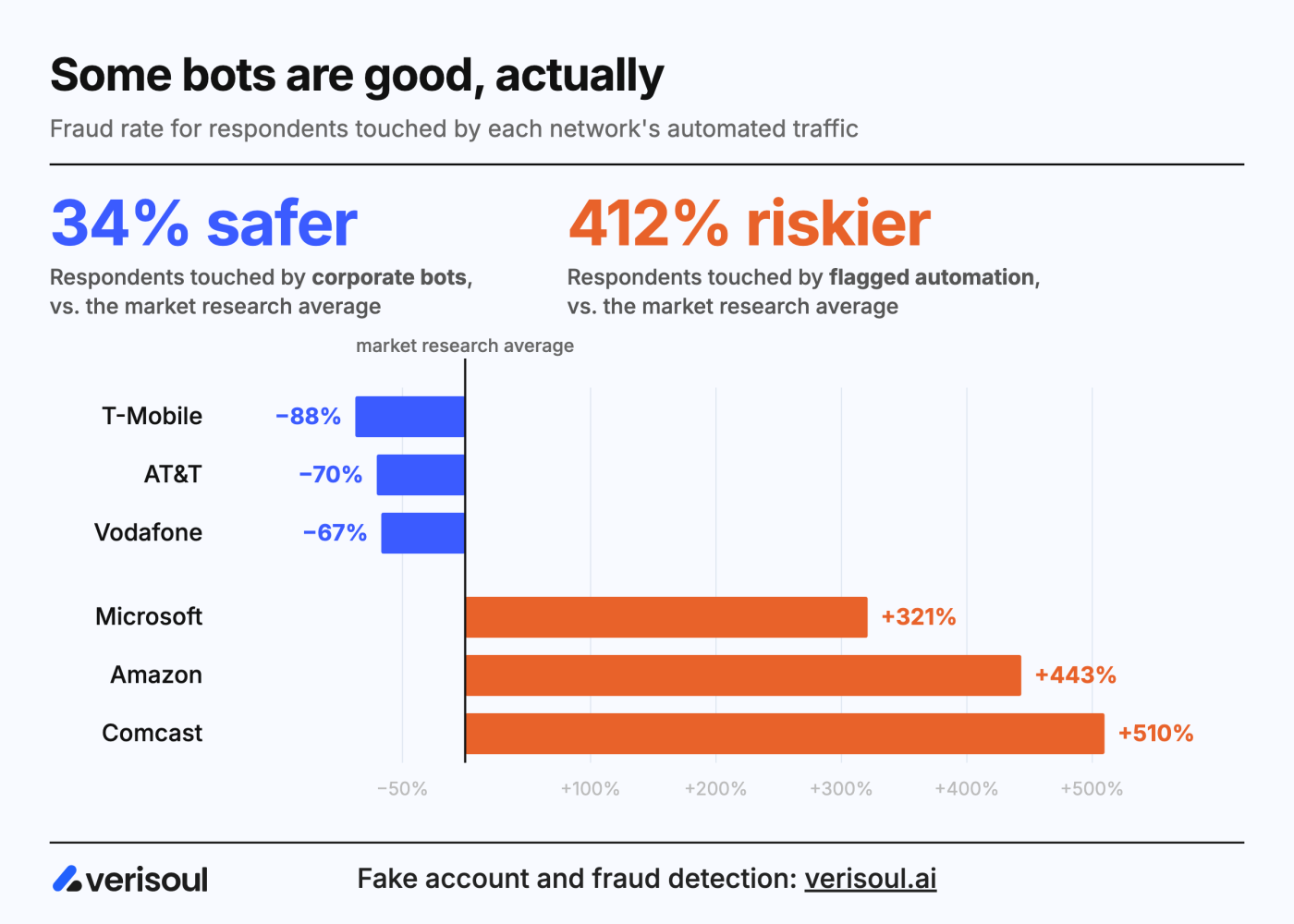
You want bots in your surveys. (No, not synthetic sample ;) )
Corporate bots, the kind that scan links for phishing before you click, are associated with 51% higher quality traffic than the market research average. Automation tied to data centers like Microsoft and AWS, or ISP router hubs, is far riskier.
From the comments:
When the same respondent reaches your project through multiple panels, you get a duplicate. Nobody's fault, but you still remove it. This "friendly fraud" is 17% of all fraud and about half of all multi-accounting we see. So go easy on panels over dupes; there's a decent chance a real person is on the other end.

From the comments (the best debate of the quarter):
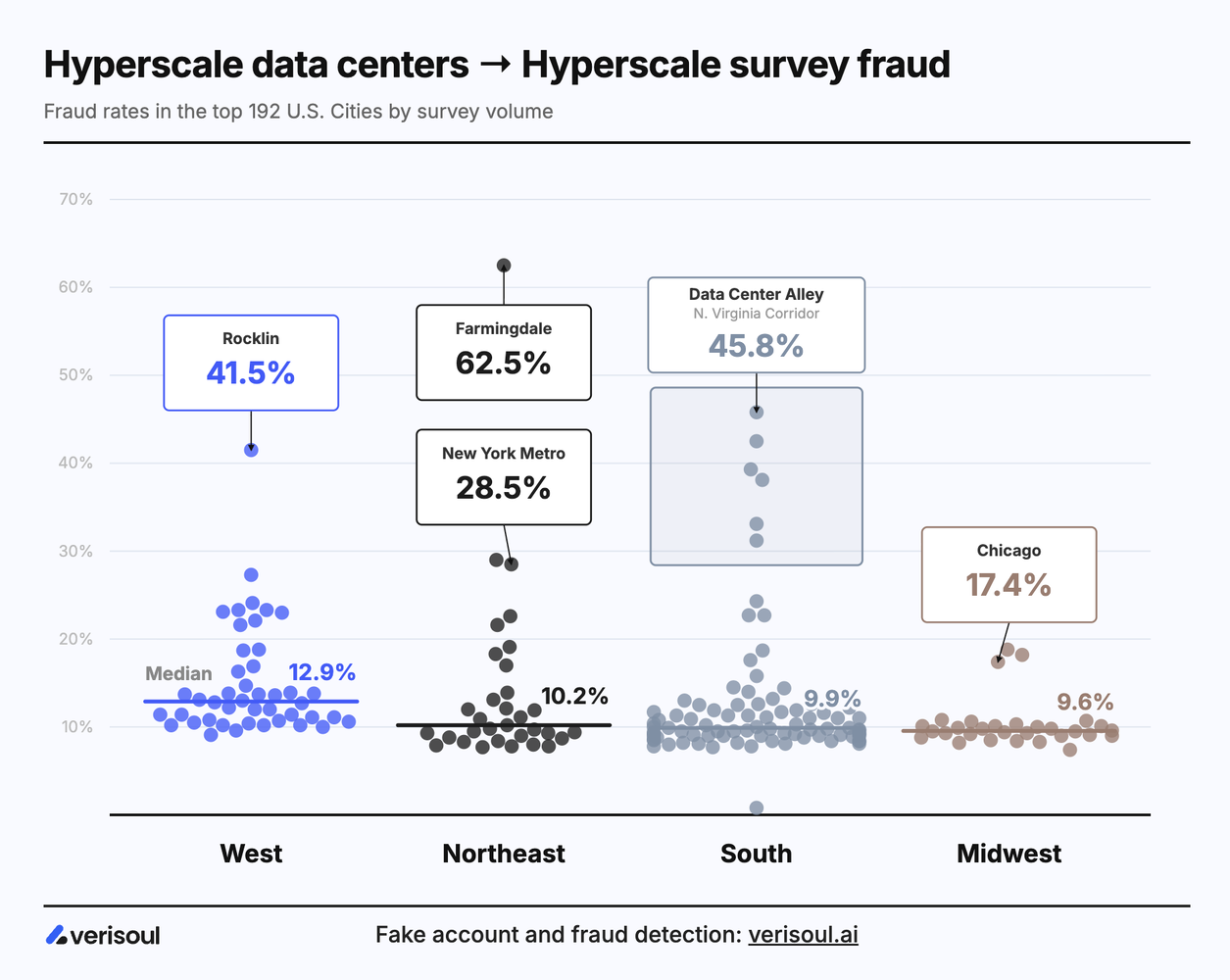
How does a city of 24,000 people end up with 45.8% of its survey respondents flagged as fraud? It sits next to 50 million square feet of server farms. Fraudsters spoof their location straight into “Data Center Alley” in Northern Virginia. ISP routing hubs carry similar risk: Farmingdale, on Long Island, isn't full of fraudsters. A huge pool of New York IPs resolves there, with fraudulent traffic mixed in.
From the comments:
A Huawei phone taking a US survey is a Chinese clickfarm, right? That was my take when I first played with the data. Wrong. Most of these location-spoofed "US" responses come from outside China. Nigeria alone has 4x as many as China itself. 🤯

These phones are cheap and global, which makes them a favorite of fraud hubs everywhere. So a Chinese phone in a US survey is a strong sign of location spoofing, just not a sign the respondent is in China.
Thanks to everyone who commented, asked for receipts, and pushed back. You made these posts better. See you in Q4.
-- Sebastian