

Instinct is the second most common personal agent on sites that use Verisoul. Between Oct 29 and Nov 1, 2026 it made up 14% of the personal-agent sessions we named, about a fifth of Meta Muse's volume, and it appeared on about 30% as many customer sites as Muse. That is a lot of traffic for a product that is still invite-only.
Instinct is a personal assistant you text or call. It runs errands using its own phone number and cloud computer plus the email, calendar and messaging accounts its user connects, booking restaurants and travel, checking out, paying bills, cancelling subscriptions and buying tickets. It is made by Spear Street Technology and opened as an invite-only beta in August 2026. TechCrunch reported a $1B Series C at a $10B valuation on Sep 28, 2026, the same day a Shopify partnership added Shop Pay checkout.
The launch came with trust questions. In August, beta testers told TechCrunch that email stayed indexed after they disconnected Google and that Instinct sent an email without confirmation, and Instinct revised its terms on Aug 26. For fraud teams, the bigger issue is simpler: a cloud browser holding real credentials and payment cards looks like account takeover even when it is legitimate.
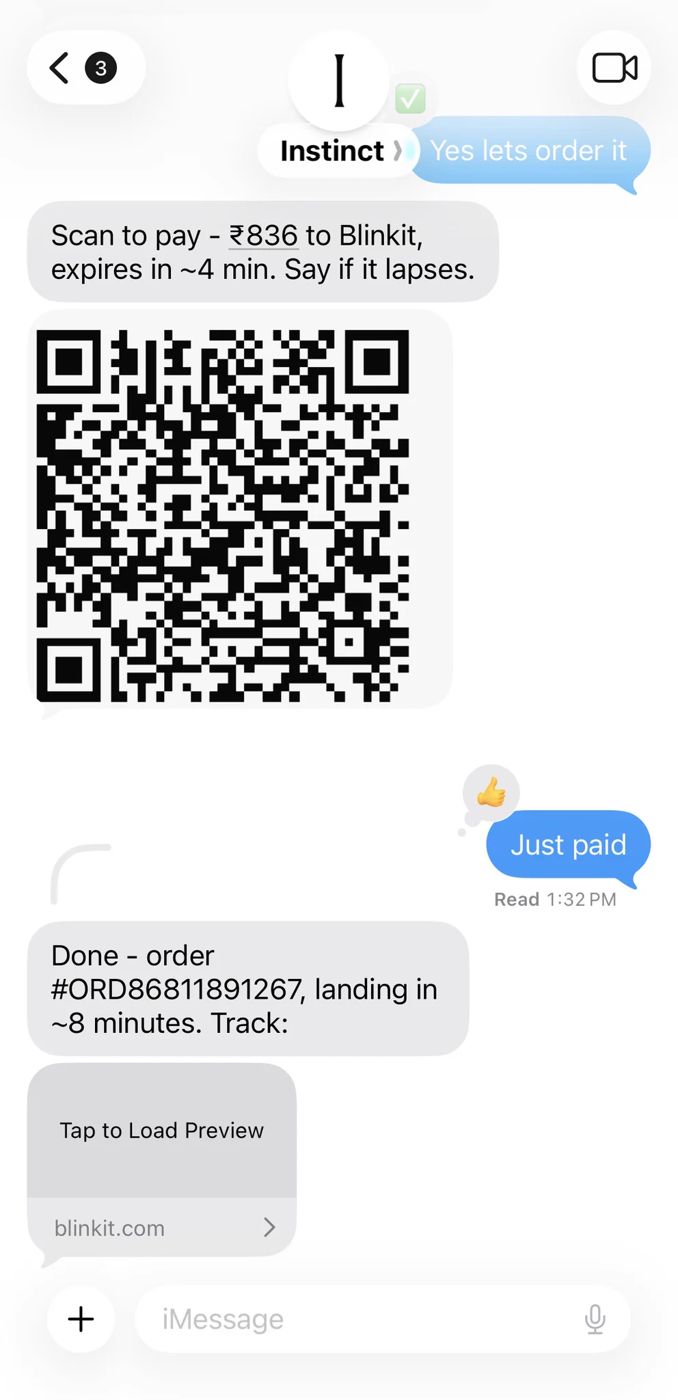
How Instinct shows up on your site
The agent works on its own virtual phone and computer in Instinct's infrastructure, not on the user's device. A researcher's teardown published on Oct 26, 2026 reports that tasks run in sandboxed microVMs with a cloud browser that can reuse saved sign-ins, which Instinct has not confirmed. Its terms make Instinct the user's agent for binding agreements, and it pays with one-time Stripe Link cards for approved amounts and with Shop Pay.
When it reaches your login page, it typically arrives with the right username and password, sometimes with a one-time code pulled from the user's email, on a device your systems have never seen.
| Check | What Instinct does |
|---|---|
| User agent | No official string published |
| Web Bot Auth signature | None, and not listed in Cloudflare's signed agents |
| IP ranges | No published list |
| robots.txt | Not documented by Instinct |
Why Instinct is hard to detect
With no user agent, signature or IP list, there is nothing to match or verify, so allowlists and signature checks see an ordinary browser. Instinct isn't listed in Cloudflare's signed agent or verified bot directories either, so sites behind Cloudflare get no named identity for it. The usual free hints, such as a logged-in session arriving from a cloud network instead of the customer's home or mobile carrier, fit Instinct but also fit every other cloud automation tool and plenty of VPN users.
The credential problem makes it worse. Because Instinct often signs in as the real user, the risk signals that would flag a stranger, like a correct password on a new device, fire on a legitimate customer's own errand. Teams that can't tell Instinct apart from an attacker end up either blocking their customers or loosening rules that catch real takeovers.
How Verisoul detects Instinct
Verisoul names Instinct by inference from two signal families. On the device side, the browser runs on a cloud GPU with an operating system and font profile that don't match each other, plus a fixed rendering fingerprint. On the behavior side, it clicks without moving the mouse and fills forms without typing. Each is unusual on its own, and together they identify Instinct's cloud browser even when the credentials are perfect.
"agent": {
  "id": "instinct",
  "name": "Instinct",
  "provider": "Spear Street Technology",
  "type": "ai_assistant",
  "detection_method": "inferred",
  "detection_signals": [
    "network",
    "device",
    "behavioral"
  ]
}idisinstinct, the name to use in your rulestypeisai_assistant, an agent acting for one persondetection_methodisinferred, meaning Verisoul identified it from evidence since Instinct declares nothingdetection_signalslistsdeviceandbehavioral, the two families that agreed
The Agent Atlas entry for Instinct shows the sample response, and the AI agent detection docs explain inferred detection in more depth.
Instinct was 14% of the personal-agent sessions Verisoul named, Oct 29 to Nov 1, 2026
Share of sessions with a named personal agent on sites that use Verisoul, %. Oct 29 to Nov 1, 2026
How to detect Instinct step by step
- Install Verisoul on login, checkout and account pages so each session returns an agent field and bot score
- Check
agent.idforinstinctbefore your account takeover rules run, so a known agent doesn't trigger a lockout - Write a rule per step: allow at checkout, step up at password and payout changes, using the AI agent detection docs
- Review new accounts created by
instinctsessions, since an agent with its own phone number can repeat sign-ups
Should you block Instinct?
Instinct acts for a real person with their own logins and cards, so blocking it can cost you customers, especially in travel, ticketing, restaurants and retail where it does most of its errands. Most teams allow it to browse and buy and label it so it doesn't trip account takeover rules.
Sign-up, payouts and password changes still deserve review. An agent with its own phone number and cloud computer can create accounts and change account details faster than a person, which is exactly what promotion abuse and takeover look like.